

Welcome to Hell (Week)
One last desperate act … Three bomb threats in one day … And Big Brother saves Nala.
It’s the week before the annual Arizona legislative session kicks off — and for lobbyists who work at the Capitol, that means it’s “Hell Week.”
Hell Week is the annual tradition of strictly following the letter of the law that prohibits lobbyists from contributing to lawmakers’ campaign coffers during the legislative session — by packing in all those donations at a series of fundraisers right before the session begins.
“As much as the institution changes, the one thing that seems to stay the same is that everybody’s going to find the way to bend the rules as much as they can for grift,” one lobbyist told us. “It’d be hard not to view it as anything other than like quid pro quo.”
For the next few days, any lobbyist worth their salt is racing between fundraisers for lawmakers, building alliances that will carry them through the session by cutting checks to the lawmakers who will decide the fate of their bills.
“You can’t swing a dead cat without hitting a fundraiser this week,” as another lobbyist put it.1
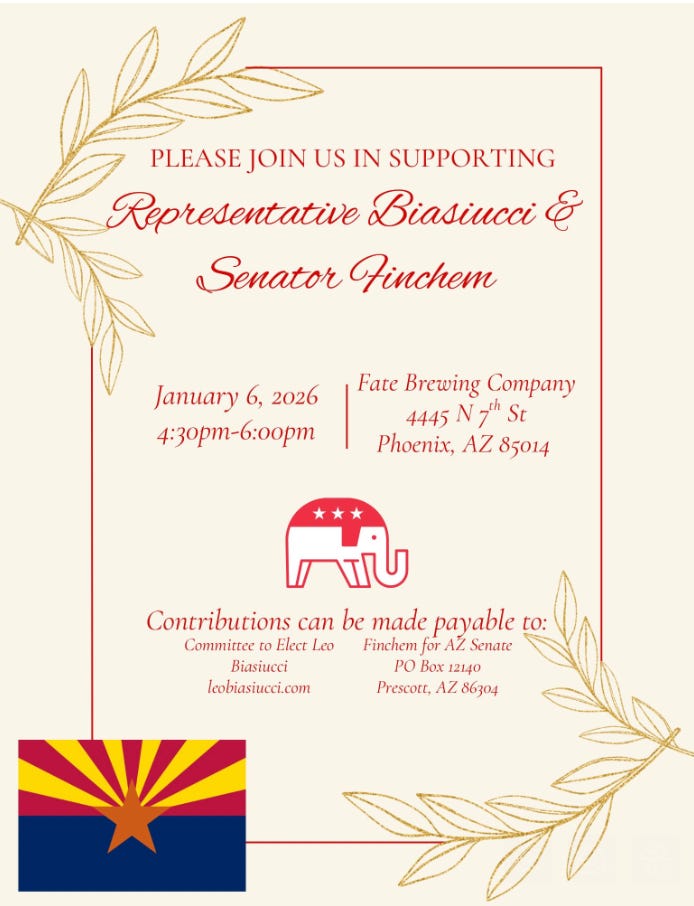
The lobbying corps dubs it Hell Week because it’s a very expensive and exhausting week for them.
“It’s an evil necessity,” a third lobbyist said, noting that they don’t want to go to fundraisers, but, as a professional lobbyist, “you look like a jerk if you’re not there.”
But Hell Week isn’t just about lobbyists currying influence with lawmakers (and the governor, who is also subject to the ban and also holds Hell Week fundraisers, to a lesser degree). There’s a whole ecosystem of influence, favors and funding that are in play during Hell Week.
For example, Hell Week is the last chance for lawmakers who want a leadership position to show that they can bring home the bacon for the caucus. Those seeking leadership positions organize fundraisers for the rank-and-file as a gesture of their ability to help colleagues win reelection, and as a way to get a leg up in their bids for speaker or whip.
And there’s even a pecking order among lobbyists. Those who organize the fundraisers are seen as more willing and able to help than those who simply show up, check-in-hand.
Not to mention the professional fundraisers themselves, who take a cut of the money brought in at these events.
“Fundraisers get their hooks in these candidates, and the fundraiser has legislators call (a lobbyist) and say, ‘hey, will you throw a fundraiser for me at your office?’ And you say, sure, because how are you going to say no? … And so you’re trying to get people to show up, because now it’s going to be embarrassing if there’s no one there to eat your carrot sticks,” one lobbyist explained.
For old pros, there’s less urgency to actually show up to these events, since they have the connections and the relationships to get a meeting. (Longtime lobbyists will often just donate online and skip the event, though many still show up just to get that face time.)
But for newcomers, Hell Week is a must.
“If cornering (Republican Sen. John) Kavanagh outside the men’s room or at a fundraiser where he’s got to raise money is the only way you can pin him down, then you better be there with bells on,” one lobbyist said. “If you can’t get a return call from someone, this is your shot, man.”
Why do we have a Hell Week?
Lobbyists have been banned from donating to lawmakers during the legislative session ever since the AZScam scandal rocked the state Capitol in 1991. The law was part of the wave of accountability reforms that came immediately following the scandal.
AZScam, for the uninitiated, was an undercover corruption sting by a fake mob boss/FBI informant who bribed lawmakers to get them to support a proposed legalized gambling bill.
If you’ve never heard the story, we suggest this awesome documentary by Capitol videographer and documentary filmmaker Mike Shahin (which new lawmakers now watch as a cautionary tale as part of their onboarding) — and the classic book about it called “What’s In It For Me?” by the mob boss/FBI informant at the center of it all.
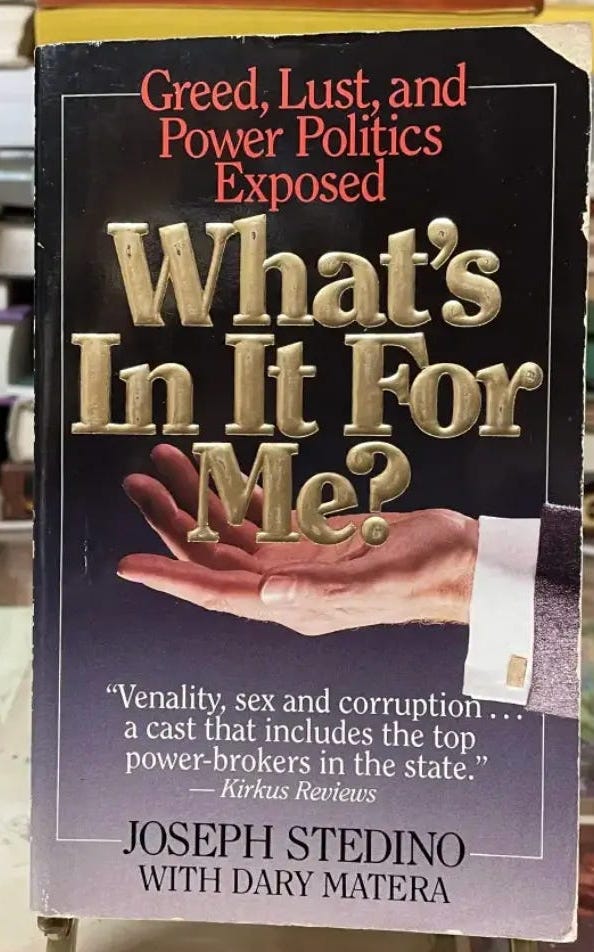
That is to say, there’s a damn good reason we bar lobbyists from donating to lawmakers during the legislative session. (Yes, you read that correctly: The way the law is written, it is illegal for a lobbyist to give a campaign contribution during the session, not for a lawmaker to accept that contribution.)
To ensure they pack in all the checks that they can ahead of the deadline, lawmakers have started streamlining the process for lobbyists, hosting more joint fundraisers than individual ones in hopes that lobbyists will have more time to cut more checks in fewer locations.
“It used to be in yesteryear, you would have one or two people that would have a fundraiser, and you’d go to 30 or 40 of them during the week. But certainly, this week, they’re aggregating. So you’ll go to a fundraiser and there will be five to 10 politicians or candidates there. … Because, if not, you just run from from location to location,” one lobbyist said.
And that aggregating of fundraisers serves another purpose, as another lobbyist noted.
“In some cases, it’s fundraisers organized by legislative committee. So it makes it really convenient if you know there’s a transportation bill you’re trying to stop to just hit that whole (transportation) committee with money,” another lobbyist noted.
There’s always a loophole
And while the idea behind the ban is to keep lawmakers from tacitly accepting bribes to vote on the bills that come before them, the ban doesn’t even work. Because many bills are “pre-filed” before the session starts, everyone knows who they have to lobby on what.
“Hell Week is the last seven days before that (prohibition) kicks in, when everyone already knows what legislators are assigned to what committees, when you’ve already seen bills that are dropping, so you know where the problem areas are and you are racing to give them money before the door shuts,” one lobbyist said.
And Hell Week fundraisers are only one of the many tactics they use to violate the spirit of campaign finance law.
For example, while lobbyists themselves are barred from donating to politicians while the legislative session is in swing, the clients that they represent aren’t. So lobbyists are often invited, urged or expected to drum up donations from their clients to help grease the wheels of government while lawmakers are considering bills.
The lobbyists often don’t mind.
“I’d much rather give them my clients’ money than my own money,” one lobbyist quipped.
Or lobbyists can donate to PACs like the Republican Legislative Victory Fund or the Democratic Legislative Campaign Committee — PACs that are controlled by lawmakers to benefit candidates on their side of the aisle, but that don’t technically fall under the ban on donating to specific lawmakers’ campaigns.
Or there’s the old favorite, famously employed by former lawmaker and current Glendale Mayor Jerry Weiers,2 of asking lobbyists to donate to your favorite charity in order to curry some favor at the Capitol.
An aisle-crossing affair
And like most events inside the halls of power, Hell Week is not actually about party.
The flier below is a good example. It’s for a Hell Week fundraiser for Republican incumbents that is being hosted by two former Democratic lawmakers now making their living lobbying their old colleagues at the Capitol.
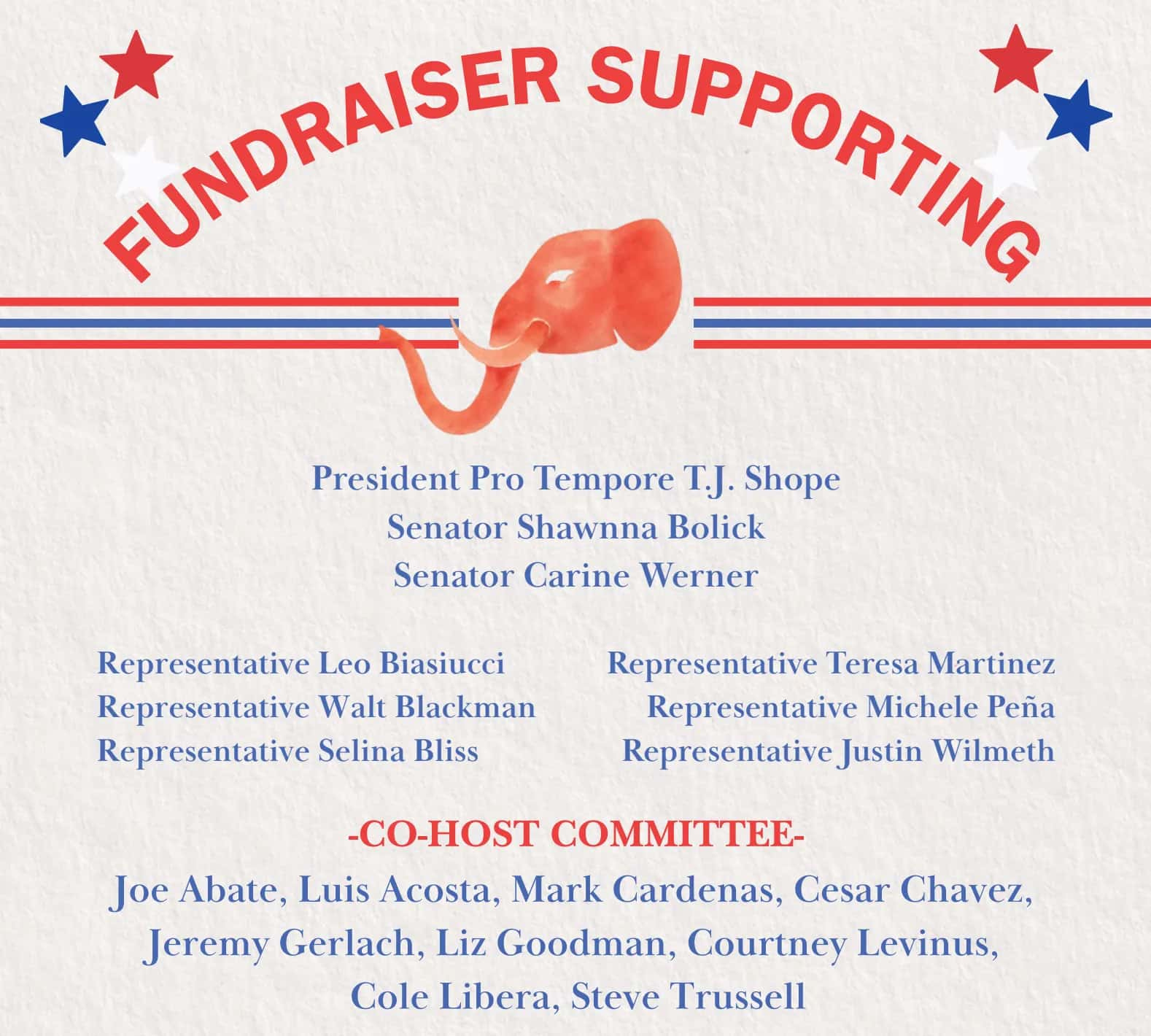
That’s not uncommon, and it’s not even frowned upon, our lobbyist sources explained.
As a lawmaker, you have to be tribal — helping only your fellow party-mates.
But as a lobbyist representing clients at the state Capitol, you have to play all sides, and make alliances with even those you don’t want to see win their elections.
“It tells you that cash is king. It’s not about party or party platform or policy. It’s about access,” one lobbyist said of the fundraiser.

Here’s a strange little observation about the looming legislative session that we pulled from our legislation tracking service, Skywolf.
Of the 224 bills that had been “pre-filed” as of our deadline today, only seven of them come from Democrats.
The other 217 are sponsored by Republicans.
That disparity won’t hold for too long, per House Democratic spokesman Robbie Sherwood, who told us that, as far as he knows, there’s no edict from Democratic leaders to slow-walk the bill filings this year.
Democrats are just taking time to perfect their bills before joining the avalanche of legislation, he said.
However, Democratic Sen. Mitzi Epstein had a more fatalistic (realistic?) take on why Democrats are in no rush to get bills in the hopper.
“I’m going to be real honest with you: When you know that the chairs of the committees are not going to hear your bills, and that’s the only way your bills, your work, is ever going to get moved forward, you plan for amendments and you don’t drop a lot of bills,” she told us. “A lot of those Republican sponsored bills are written by lobbyists who take them to the majority party because they want them to get passed, right? That’s why you don’t see a whole lot of Democratic sponsored bills.”

That’s a lot of bomb threats: The Arizona Supreme Court building was evacuated on Monday after a suspicious package was found in the mailroom of the building, AZFamily’s Ben Bradley reports. The package tested positive for homemade explosives. In a separate incident near Queen Creek, a bomb threat turned out to be a hoax — an example of swatting, per Fox10’s Brent Corrado. And in yet another bomb-related incident on Monday, Sedona police checked on a bomb threat at the Sedona Airport Terminal parking lot, but didn’t find anything suspicious, Joseph K. Giddens reports for the Red Rock News.
Shot across the bow: U.S. Defense Secretary Pete Hegseth censured Democratic U.S. Sen. Mark Kelly for urging servicemembers to disobey illegal orders, per the Associated Press. In a lengthy post on Twitter, Hegseth said the censure was a necessary step toward demoting Kelly and reducing his retirement pay. Kelly called the decision “outrageous and wrong.” He claimed Hegseth was trying to “send the message to every single retired servicemember that if they say something he or Donald Trump doesn’t like, they will come after them the same way.” Kelly has 30 days to appeal the censure, per Politico.
Nothing (for) burgers: Republican Rep. Teresa Martinez doesn’t want Arizonans to be able to use food stamps at fast-food restaurants, Capitol scribe Howie Fischer reports. Meanwhile, Republican Rep. Leo Biasiucci and nine other Republican lawmakers want Arizonans to be able to fund Turning Point USA by buying a specialty license plate, the Mohave Valley Daily News reports. And Republican Sen. John Kavanagh wants school districts to be able to sell or lease vacant schools so they can be turned into affordable housing for teachers or other government workers, per Fischer.
Buy a burger for a local journalist?
RoboCop isn’t what we expected: Officials in Gilbert are testing whether drones can respond to 911 calls faster than police or firefighters, the Daily Independent’s Tom Blodgett reports. The Gilbert Police Department has already been doing a 45-day test of the program, and has found that the drones can also help determine when sending a real human cop isn’t actually necessary.
“We can delay the actual physical response,” in low-priority calls, Gilbert Police Lt. Geoff Soderman said. “Assign those assets on the ground to other priority calls of service.”
Axon in the air?: Banner Health is pulling out all the stops as executives try to get approval for a $400 million medical campus in Scottsdale, J. Graber reports for the Scottsdale Independent. Banner hired canvassers to go door-to-door asking residents to send letters to the Scottsdale City Council, which is considering a rezoning request that Banner needs to build the campus. Executives also asked their employees to email a form letter to the council as Banner tries to head off critics who say the zoning would make way for an “unnecessary hospital.” The strategy hasn’t gone unnoticed, with a deluge of emails all arriving simultaneously in the council’s inboxes.
“It’s very obviously an electronic set up,” Scottsdale City Councilwoman Jan Dabauskas said.

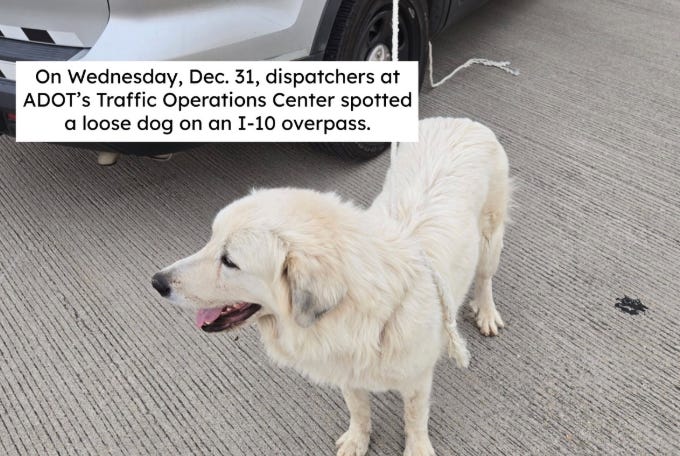
After hours of watching traffic crawl across freeway cameras on New Year’s Eve, a state Transportation Department worker got a rare change of pace.
Traffic Operations Center Supervisor Scott Stenbakken spotted a dog wandering on an I-10 overpass, then tracked down her owner through a lost pets Facebook page.
Nala is now back with her family — a rare case of government surveillance actually being kind of wholesome.
We’re just glad she made it home without a citation.
We gave all the lobbyists quoted today anonymity so they would speak freely.
Correction: The original version of this post said Jerry Weiers was a former House speaker. That was his brother, Jim Weiers. Jerry was a longtime chairman of the powerful rules committee.
If you haven't already...I encourage everybody to read "What's in it for me" by J. Stedino. You will never feel the same about elected officials in AZ again. It's been a long time since "AZScam" but, the effects of this well orchestrated sting still reverberate. Some of it is hysterical. I will eagerly load up on popcorn and watch the movie.
Regarding the anonymous comment that a lobbyist might only get a chance to get to talk to me at a fundraiser for me, the lobbyist must be from out-of-state. For the last 20 years, I have given everyone, even out-of-district nobodys, phone or office appointments.