

Lies, damn lies and political statistics
Arizona’s vetoed queen … “Legal” has no meaning … And smile!
Here at the Agenda, we freaking love stats.
Now that the annual legislative session is over and all the bills are signed or vetoed, we spent the day geeking out in Skywolf, our legislative intelligence service, to bring you some of the freshest stats from this year’s legislative session.
Pop quiz: Which state lawmaker had the most bills signed into law last year? Who was the top bill-slinging Democrat? Who had the most vetoes?
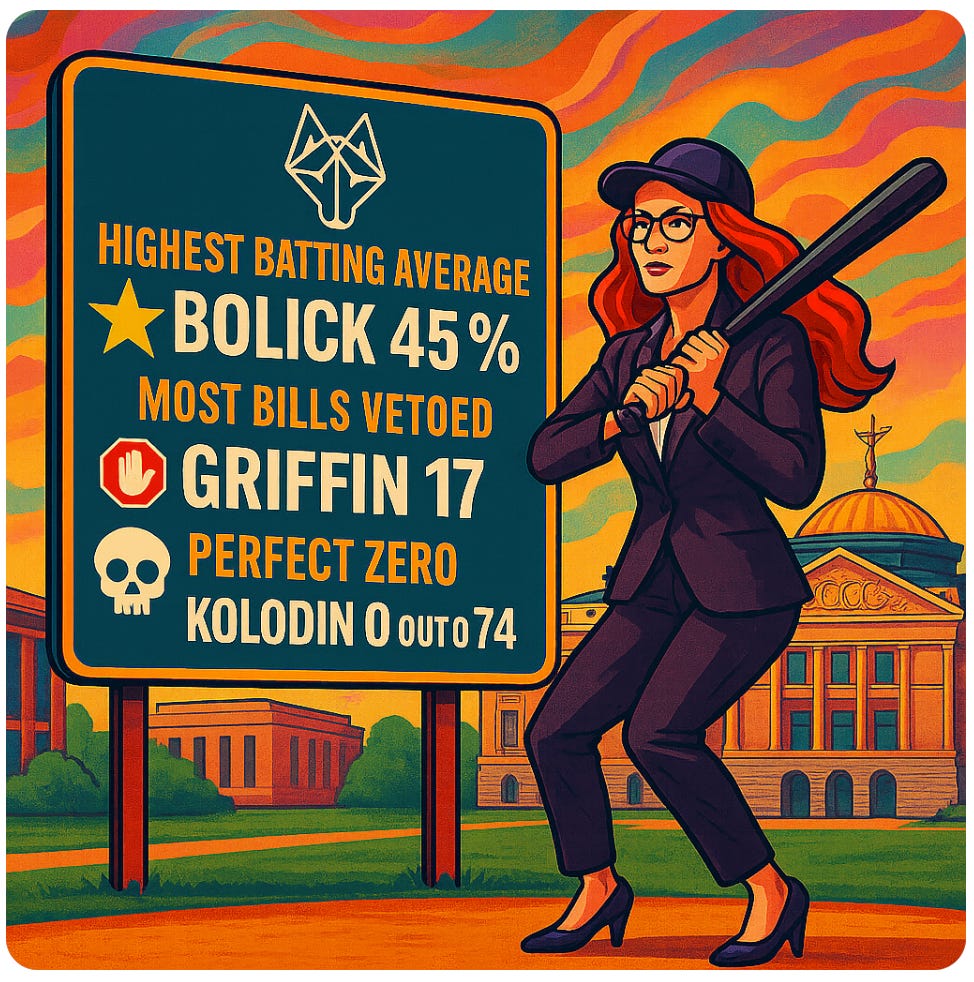
Our art intern, ChatGPT, knows that any good stats roundup needs a scorecard and a sports analogy.We’ll get to all that, but maybe we should start with some basics.
Each year, lawmakers file hundreds of bills. This year, it was almost 1,900 pieces of legislation (including memorials and resolutions — which aren’t actually “bills” and don’t need the governor’s signature).
And that number has been ramping up — a decade ago, the norm was closer to 1,300 bills introduced per session.
Meanwhile, the number of bills that actually make it into law has been shrinking in recent years — thanks to Democratic Gov. Katie Hobbs’ liberal use of her veto stamp.
Republican Gov. Doug Ducey, on average, signed upwards of a quarter of all the bills that got introduced in a given year (and almost all of the bills he signed came from Republicans). He didn’t veto much — a dozen, maybe two dozen bills per year.
Hobbs is a little different.
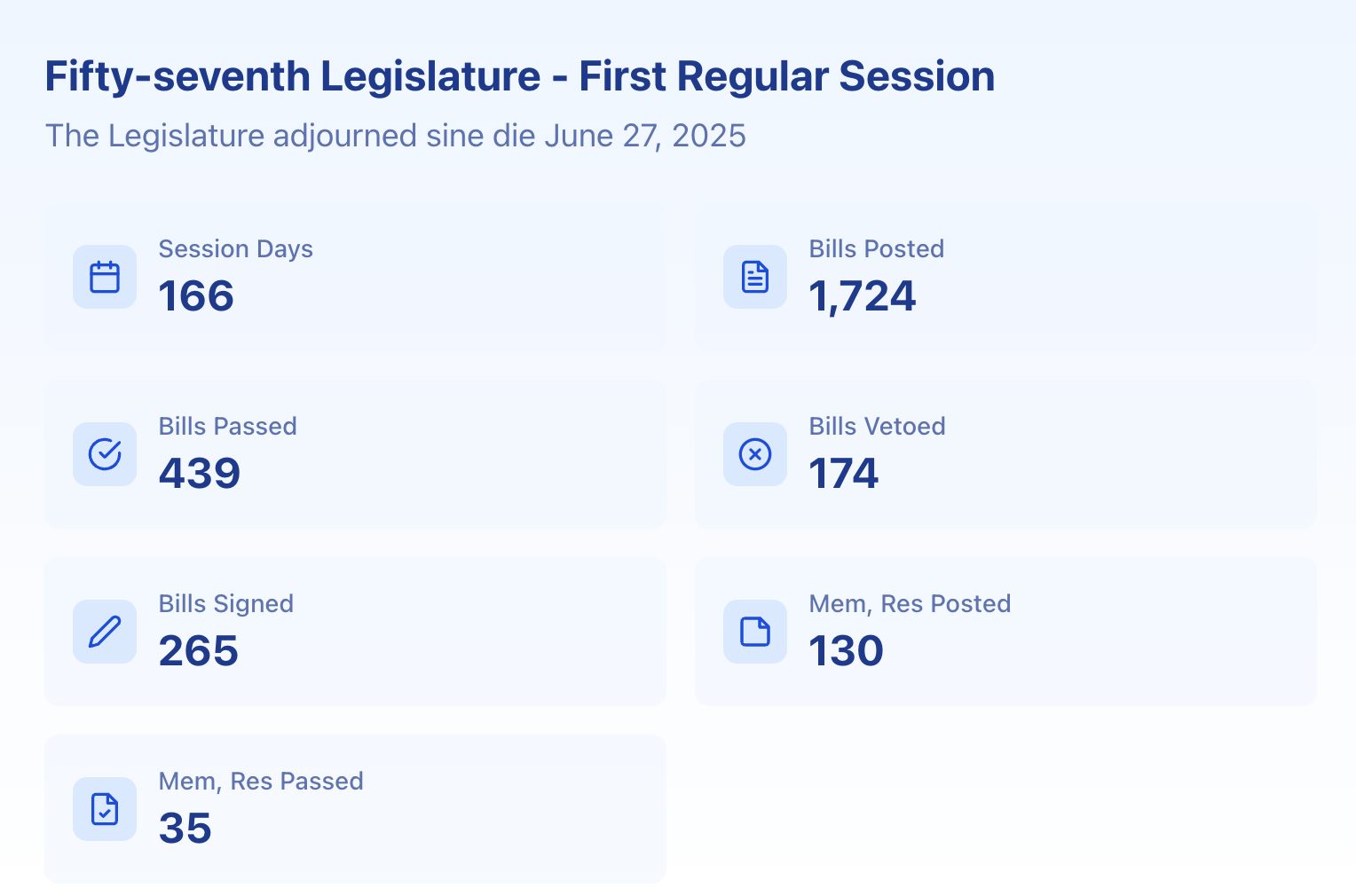
Even policy professionals struggle to follow all 1,700+ bills per year. That’s why we built Skywolf, a legislative intelligence service for Arizona political pros. Request a demo this summer!Of the 1,724 actual bills introduced this year, Hobbs only signed 265 of them into law — roughly 15%. And as you might expect, the “veto queen” is killing bills like it’s her job (which it is).
This year, she broke a personal record by cutting down 174 bills, or about 40% of everything that landed on her desk.
So that’s the big picture.
But how did individual lawmakers fare?
Let’s take a look.

Batter up!
One stat we love to look at is a lawmaker’s batting average. That’s the number of bills that got signed into law divided by the number of bills they introduced. It’s one way to see who’s effective and who’s just making noise.1
Democrats, understandably, hate this stat.
That’s because, thanks to the partisan nature of the Legislature, Democrats’ batting averages suck.
Republicans won’t hear their bills in committee, they argue, and there are many ways to be an effective lawmaker — making laws is just one of them.
Fair enough! But the job title is “lawmaker,” so…
Democratic Rep. Alma Hernandez is pretty consistently the exception to the bad-batting-average rule. The centrist Democrat sponsored 15 bills and saw four of them make it all the way into law, meaning she batted a very respectable 27% this year.2
That puts her way ahead of most Republicans, not to mention all of her fellow Democrats.
In fact, only seven Democrats had any bills signed into law this year. Besides Hernandez, the only Democrat to get more than one bill on Hobbs’ desk was Democratic Sen. Analise Ortiz, who happens to be one of the most progressive Democrats in the House. She had two bills signed.
Surprisingly, the best Republican batters aren’t moderates.
They’re mostly hardline Republicans, like Republican Sen. Shawnna Bolick, who got an impressive 15 bills signed into law this year of the 31 she sponsored. For the math-challenged, she’s batting 48%.
Right behind her was Republican Rep. Leo Biasiucci, who got 10 of his 22 bills signed into law this year — batting a solid 45%.
Republican Rep. Laurin Hendrix and Sen. Carine Werner each got seven bills signed into law — Hendrix started with 16 and Werner sponsored 17, making them among the most effective lawmakers at the Capitol.
Still, batting averages aren’t an exact science.
For example, oftentimes, Bill 1 will get adopted as an amendment to Bill 2. Then Bill 2 gets signed into law, and the sponsor of Bill 1 never gets credit. So it goes…
The veto magnets
Republican Sen. Jake Hoffman is clearly the lawmaker whom Hobbs dislikes the most.