

Dark money, dim light
Who’s policing Prop 211? … Arpaio still haunts us all … And the Howie mute button.
As opponents of Arizona’s new dark money law tell it, the Voters’ Right to Know Act amounts to “donor doxxing.”
In reality, the reports that have come out of Prop 211 so far don’t tell us that much about who’s influencing Arizona’s elections.
Last week, lawyers for conservative megadonors told the Arizona Supreme Court why it should overturn Prop 211: They argue the law violates constitutional rights to privacy and free speech because it forces political organizations to list their donors’ names and addresses.
Of course, during last week’s oral arguments, the assassination of conservative organizer Charlie Kirk wasn’t far from anyone’s mind.
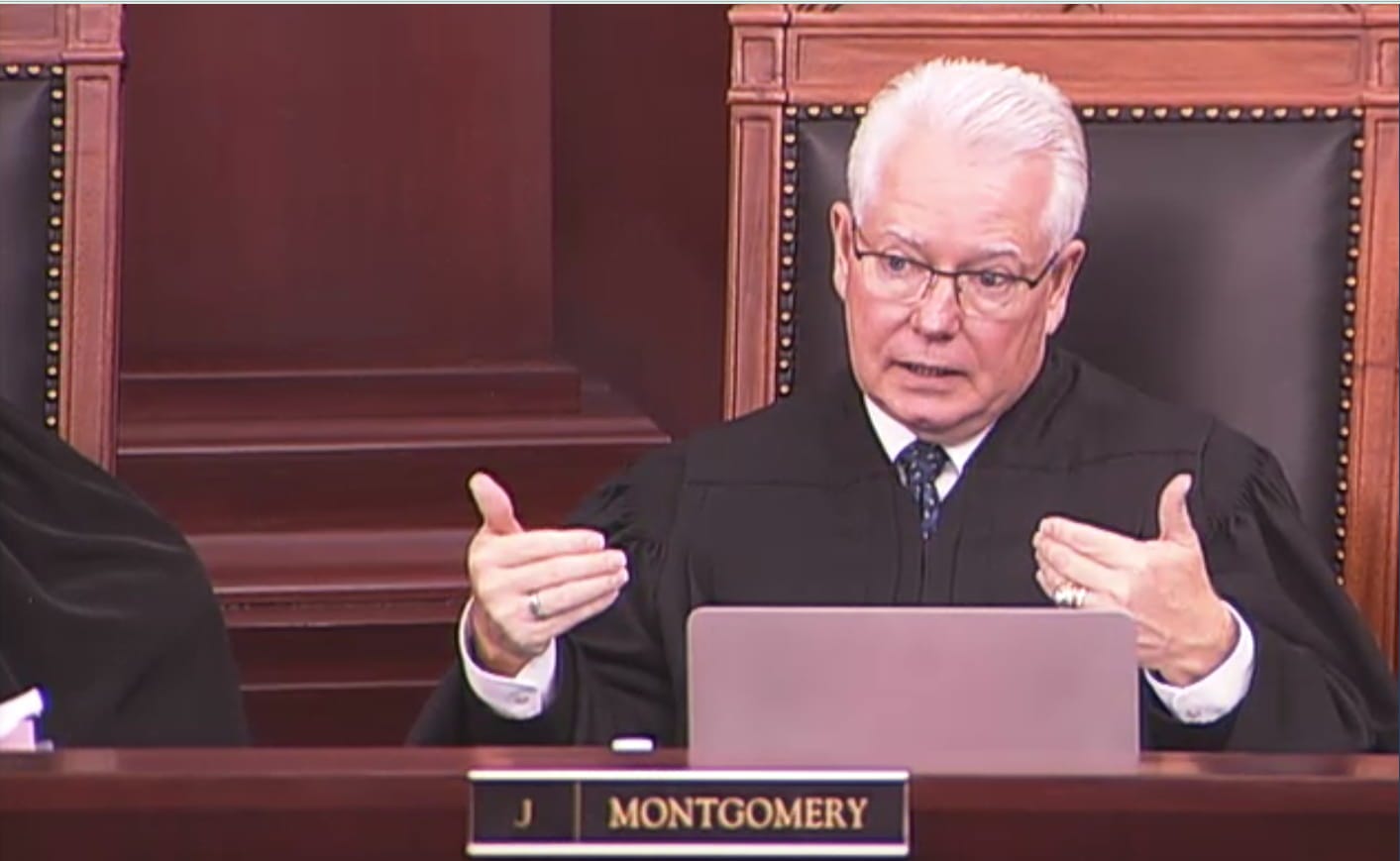
“It is not lost on us what happened yesterday,” Justice Bill Montgomery said during the court hearing.
Kirk is something of a shoehorned poster boy for the need to keep donors’ names secret. That link is pretty tenuous — Kirk was the face of an organization that donates to campaigns, and there's no indication that his murder had anything to do with someone finding him on a campaign finance report.
But that’s not to say he’s irrelevant to the story.
Turning Point Action, the campaign arm of Turning Point USA, has been hit with two Prop 211 complaints alleging it’s illegally hiding the source of its donations. It’s the only organization in Arizona with open complaints under the law.
The Supreme Court case is currently under advisement, and an official ruling could be months away.
But the plaintiffs’ claims that the Prop 211 reports invade donors’ privacy made us curious about what kind of salacious details the reports contain. It turns out, those reports reveal a lot less than the hype suggests.
In 2022, Arizona’s voters overwhelmingly passed Prop 211. Under the law, groups spending at least $50,000 on a statewide campaign1must reveal the original donors for contributions above $5,000. Campaigns had to begin filing those reports last year.
The disclosure only applies to those who donate for campaign media spending — like TV ads or campaign mailers — and donors can opt out by directing their money away from that purpose.
The law charges the Arizona Citizens Clean Elections Commission, the state’s nonpartisan election agency, with implementing and enforcing Prop 211.
But that enforcement mechanism is reactive. The commission isn’t policing campaigns; it only investigates complaints that are filed.
Terry Goddard, former Arizona attorney general who tried to get versions of Prop 211 on the ballot four times, said he and the ballot measure’s other drafters “did not feel that we would have public support for setting up a new police agency” to enforce the anti-dark money law.
“Our thought was that the news media and the opposing candidates (would be) our best enforcement mechanisms,” he told us.
Since we were assigned homework, here’s how to file a complaint with the Clean Elections Commission, and here is its contact information.
The Secretary of State's Office has posted 204 VRKA reports since political committees had to start filing them last year. They’re posted on a public database that lists every report filed since January 2024.
The Clean Elections Commission has received eight complaints about the VRKA (Voters’ Right to Know Act) reports. Six of those were dismissed and two are pending.
The two yet-to-be-resolved complaints allege that Turning Point Action failed to disclose its donors while supporting both U.S. Rep. Andy Biggs’ gubernatorial bid and the recall of Mesa City Councilmember Julie Spilsbury.
When someone files a complaint with the commission, Executive Director Tom Collins first checks to make sure it alleges a legitimate violation.2
If a complaint makes it past Collins’ initial review, the entire commission can weigh in. If it decides to issue a punishment, Prop 211 says the commission can fine the violator up to three times the amount of the improper contribution, and those fines go into the Clean Elections Fund to support its enforcement work.
Collins has yet to send a complaint to the commission for further review.
Ryan O’Daniel, who runs the conservative government relations firm Intrepid Public Affairs, filed at least three of the eight complaints the commission has received. He wrote the complaints “on behalf of multiple Arizona candidates,” alleging three different progressive groups didn’t disclose their original donors.
O’Daniel said Opportunity Arizona, a Democratic advocacy group, didn’t include its top three donors, as required under Prop 211. He attached examples of attack ads against Republicans that didn’t list the groups’ donors.

Collins dismissed the complaint because Opportunity Arizona said it had no original donors over $5,000. The three top-donors rule applies only to original donors, not intermediaries that pass along money from others.
And that’s the issue with a lot of the reports — the nesting doll of intermediaries that campaign money passes through continues to obscure who originally donated it, even though that was what Prop 211 was supposed to prevent.
The VRKA reports are full of vague political committee names and LLCs that can say their money is the result of a bunch of contributions that are less than $5,000 each.
It’s difficult to prove that’s not the case.
While the commission already audits candidates who participate in the public campaign funding program, Collins said if the commission were to even suggest auditing VRKA filings, “the immediate reaction would be overwhelmingly negative.”
As soon as the commission votes to audit a VRKA filer, “that's a lawsuit,” he said.
And Turning Point has plenty of lawsuit money.
In late July, the liberal advocacy PAC Unity Rising filed an eight-page complaint against Turning Point, alleging it failed to disclose hundreds of thousands of dollars in support of Biggs. The complaint includes evidence like extravagant donor events and Turning Point posting that it intends to spend more than $500,000 in support of Biggs.
Unity Rising filed an updated complaint on Aug. 4, four days after Turning Point filed a VRKA report. The report lists more than $400,000 in campaign media spending for Biggs, which they paid to Arizona Sen. Jake Hoffman’s marketing firm. It doesn’t list any donors.
The next step is for Collins to review Turning Point’s response to the claim, then decide how to proceed.
In the past, Collins noted, Clean Elections’ watchdog role has forced elected officials out of office. But enforcing Prop 211 is new territory, especially against a behemoth like Turning Point.
“There is a real disconnect between what I think voters clearly want and what the institutions that surround our elected officials think is best for them to win elections,” he said.

Trust, but verify: Maricopa County officials say the cost of complying with a federal lawsuit over racial profiling will reach $350 million next year since it began under former Sheriff Joe Arpaio. But the monitor overseeing the reforms at the sheriff’s office wants to know how much of that expense was regular operations that had nothing to do with the lawsuit, KJZZ’s Matthew Casey reports.
Drawing a hard line: The Maricopa County Republican Committee censured Lisa Everett, the party chair in Legislative District 29, for trying to help the owner of a sushi restaurant in Glendale who has been stuck in ICE custody since May, the Phoenix New Times’ Morgan Fischer reports. The fact that Everett made the trip to the Eloy Detention Center alongside a Democrat didn’t help.
No end in sight: The battle over Arizona’s election handbook continues as Republican lawmakers object to rules from Democratic Secretary of State Adrian Fontes about determining the citizenship of voters, restrictions on voter intimidation and other measures, VoteBeat’s Jen Fifield reports.
Birds of a feather: Casa Grande is yet another Arizona city that is considering installing Flock cameras, PinalCentral’s Jodie Newell reports. Critics of the controversial technology say it’s an invasion of privacy and local police use information from the cameras to aid in the Trump administration’s crackdown on immigrants. Sedona backed out of its arrangement with Flock Safety and Tucsonans are protesting the use of the cameras at the University of Arizona, the Arizona Luminaria’s Yana Kunichoff reports.
Maybe sit this one out: Former U.S. Attorney General William Barr weighed in on the Oak Flat mine controversy with an op-ed in the Wall Street Journal. He’s trying to dissuade religious-liberty organizations from embracing what he calls the “reckless legal theories” of the San Carlos Apache tribe who believe the area is sacred.
Click the button to support our reckless legal theory that journalism should be local, loud and even a little reckless.
In other, other news
The Sedona City Council publicly censured Mayor Scott Jablow for creating a hostile work environment, breaking attorney-client privilege and other violations (Tony Capobianco / Verde Independent) … Republican state Rep. John Gillette doubled down on blaming Democrats after the murder of Charlie Kirk, the latest indication he’s removed all all filters now that he’s not running for re-election (State48News) … Sparks keep flying between Scottsdale Mayor Lisa Borowsky and City Manager Greg Caton — this time, Caton is accusing Borowsky of expressing a lack of confidence in Scottsdale police (Tom Scanlon / Scottsdale Progress) … A Washington woman was arrested after she threatened to set employees on fire at the Maricopa County Animal Care and Control (Kevin Reagan / 12News) … Daily low temperatures in Phoenix stayed above 90 degrees this summer at more than triple the average rate (Katherine Davis-Young / KJZZ) … And Phoenix is one of many cities that are combining art and science to design shade structures that help residents deal with the heat (Washington Post).

Skywolf, our legislative tracking software, can be utilized even after the legislative session has finished.
Until the general effective date, we’ll be using it to remind you of all the new laws that are landing on the books this year.
Psssttt… We suggest keeping track of these flash cards because we hear a pop quiz might be on the horizon.
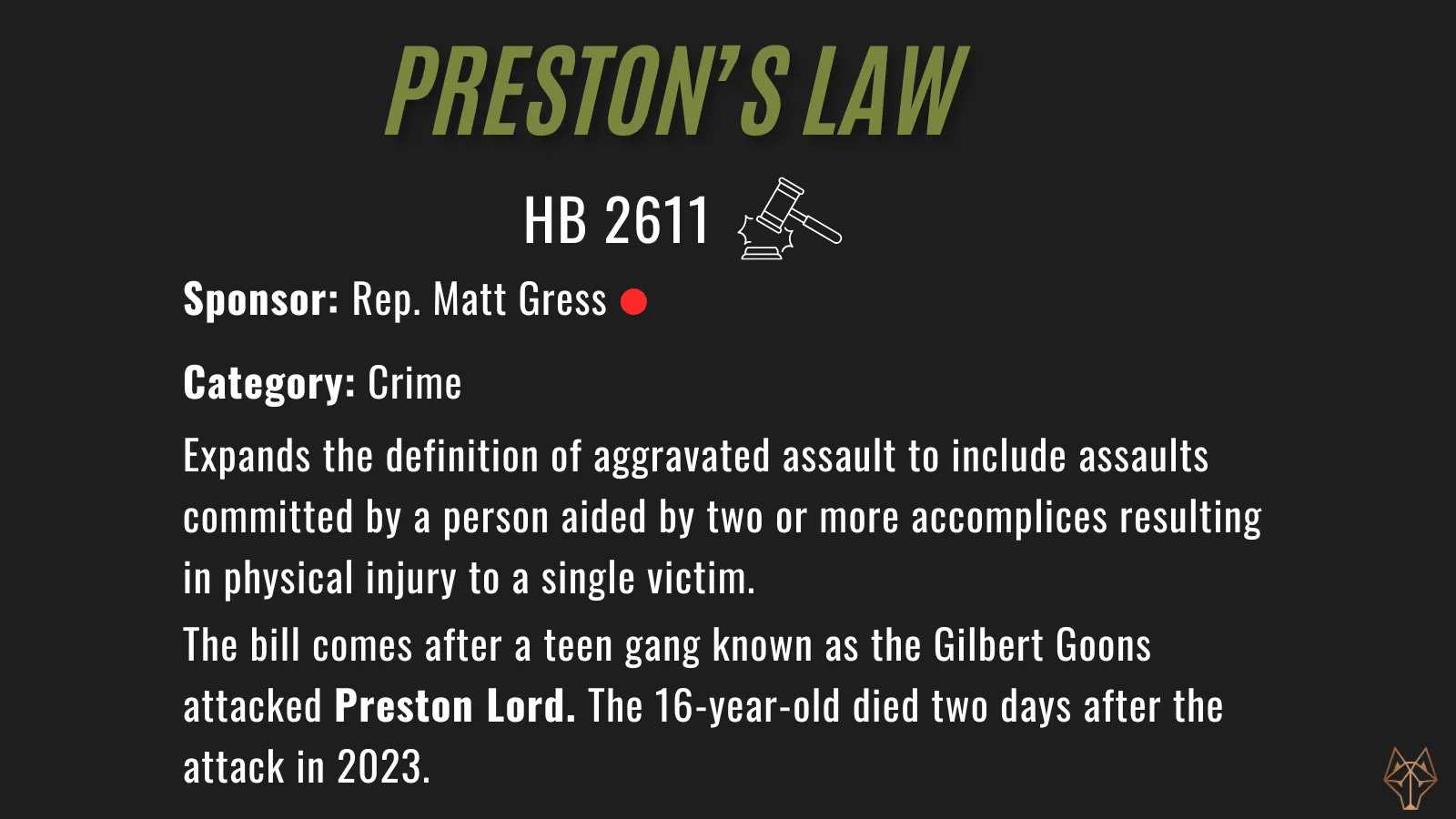
And if you’re a policy pro who hasn’t checked out Skywolf yet, you’re in luck! We’re doing a series of webinars you can pop into to hear from your colleagues about how Skywolf can help your legislative workflow.
If you work for a state agency, join us this Thursday at 10 a.m. to see Skywolf in action and hear from a state agency about how it’s benefiting their public policy work.
If you’re a lobbyist or policy pro for a nonprofit or advocacy group, join us this Friday at 10 a.m. to hear from a lobbying pro about how they use Skywolf to stay on top of the madness at the Capitol.
On Thursday, September 25, we’ll show you a workflow designed specifically for policy professionals working at municipalities, and on Friday, September 26, we’ve got a webinar designed specifically for associations.

Gov. Katie Hobbs held a press conference yesterday to announce a new executive order creating a task force that she says will develop a statewide energy plan to help facilitate emerging energy projects and “power our growing economy.”
The press conference was a pretty stiff affair, with not much real news value until the task force has something to report.
But we did get a kick out of watching the livestream, which cut out the moment Capitol Scribe Howie Fischer attempted to ask a question.
“Good morning, governor,” were the last words we could hear him say.
For once, the politicians got what they’ve always wanted: the ability to mute Fischer.
The threshold is $25,000 for local, non-statewide campaigns.
For example, one of the dismissed complaints was about a congressional race, which isn't covered under Prop 211.
Knowing Howie, he'll make sure to ask lots more questions to make up for it