
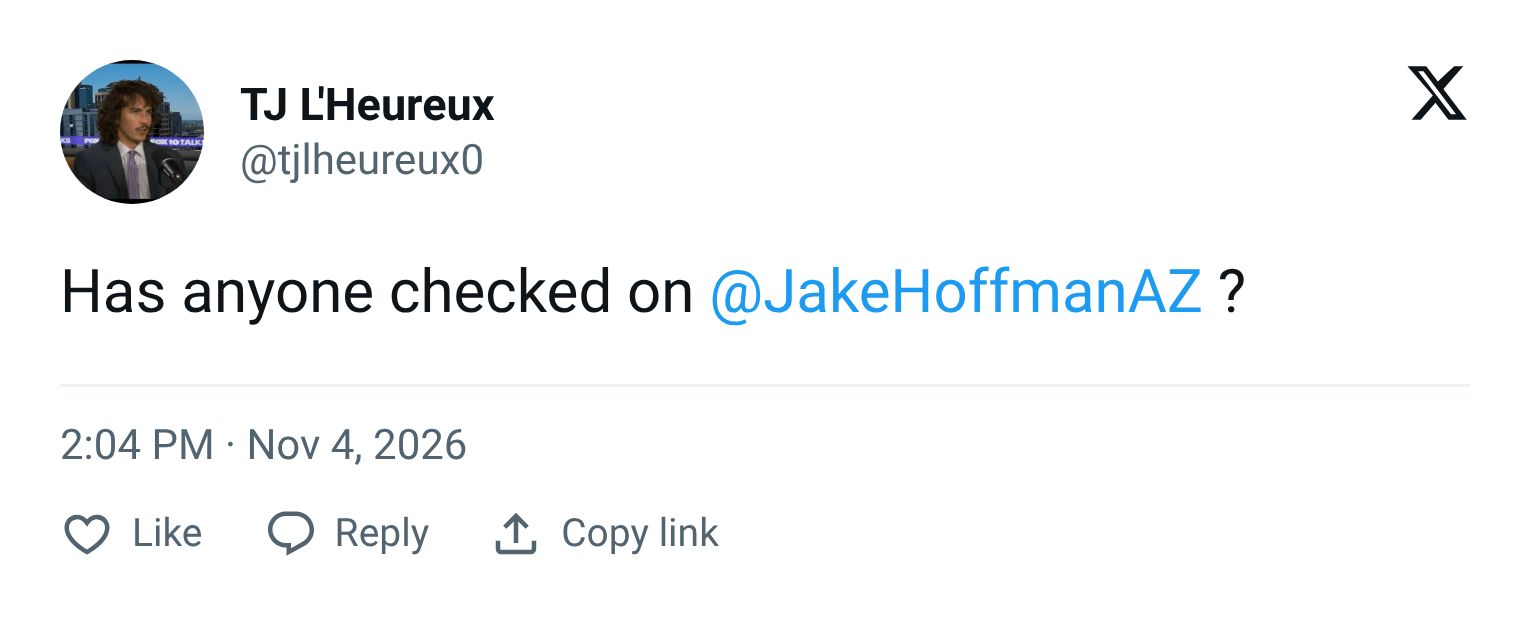
Republican Sen. Jake Hoffman, the leader of the GOP’s far-right Freedom Caucus, might only rake in a meager $24,000 annual salary at the Arizona Legislature.
But for one of the key architects behind the insurgent takeover of the Arizona Republican Party — a years-long project that most recently reverberated into Democrats’ historic midterm triumph — being an elected official is basically a side hustle.
It’s kind of like Jay-Z said: Jake Hoffman’s not a businessman, he’s a business, man!

And business has been pretty darn good, it seems.
Since 2022, Arizona campaigns and political committees have reported paying two of Hoffman’s political consulting firms about $7.4 million, according to 230 payments in the Secretary of State’s campaign finance database.
And 2026 — the year his party got steamrolled — was one of his best yet, with Hoffman’s firms receiving around $3.3 million this year.
To be clear, that money isn’t profit his firms have kept. Many of those payments were made so that Hoffman’s company could place ad buys on TV, online or elsewhere.
We don’t know for sure how much Hoffman pocketed.
But Republican public relations consultant Barrett Marson told us that the typical industry take-home margin for such services is around 10%, depending on the client and size of the buy.
We told Marson about our research and how much money Hoffman’s firms were handling in Arizona this year.
“Wow. And that’s just what we sort of know about,” Marson said. “It’s a good gig if you can get it. He’s made a living — a very good living — off of reducing the Republican Party to minority status.”
Hoffman’s biggest client by a mile is Turning Point, the right-wing organization that he used to work at as a spokesperson — and which has had a notably bad go of things recently.
Turning Point PAC Arizona paid 1Ten, Hoffman’s most prominent company, just less than $3 million this year, nearly all of it for independent expenditures on billboards, radio ads, digital ads, signs and text messages in the governor’s race.
You know how that went. Democratic Gov. Katie Hobbs won a second term in a 13-point rout, and Democrats took the House and Senate for the first time since 1966.
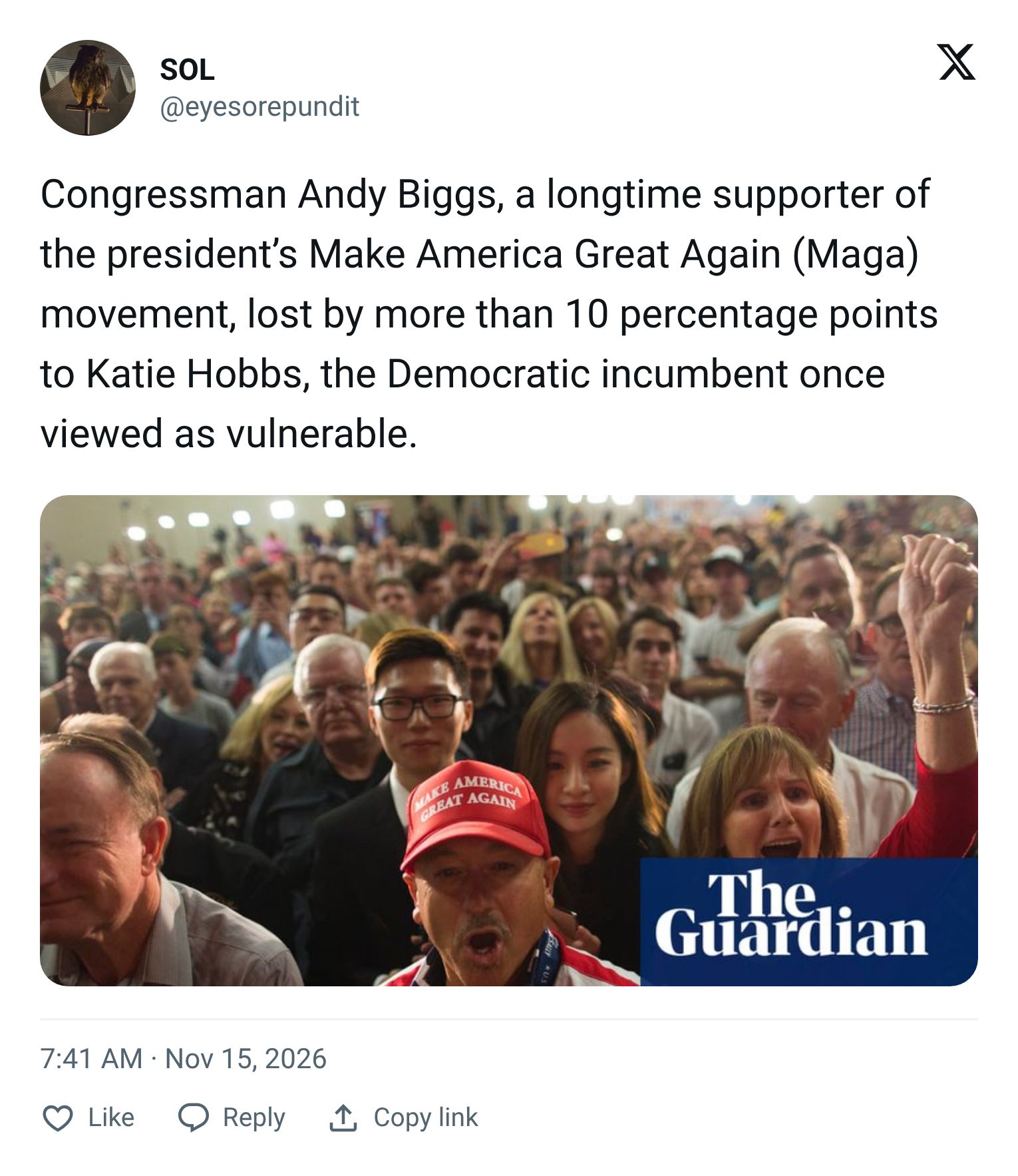
Similarly, Hoffman’s company was paid more than $3.4 million back in 2022 to do almost exactly the same thing he did this year: promote GOP gubernatorial candidate Kari Lake, who also lost to Hobbs four years ago.
But that’s not the only company Hoffman owns.


Hoffman’s 2025 financial disclosure lists 16 businesses that he or his wife control. Eight are registered with the Arizona Corporation Commission and considered active. They have names like:
Baby Bumper — a baby safety products company he started with his wife, Kimberly, in May 2014
Mags & Riley — a children’s book company started in August 2023 (because every good right-winger should be in the children’s propaganda business)
The Hananiah Group — a real estate business he started with his brother, Michael, in February 2015
Rally Forge — founded in May 2016 and permanently banned from Facebook (and suspended from Twitter) in 2020 for operating a “troll farm” of fake social media accounts
Forged Public Affairs — founded in October 20181
But don’t confuse that one with Forged Communications, his second-most active political firm, through which Hoffman provides communications strategy consultation.
Hoffman recruited Republican State Treasurer Kimberly Yee to run for schools superintendent and told us in July that he created GOP secretary of state candidate Alex Kolodin’s campaign launch video, which infamously touted a misleading endorsement from his opponent-to-be, then-Arizona Republican Party Chair Gina Swoboda.
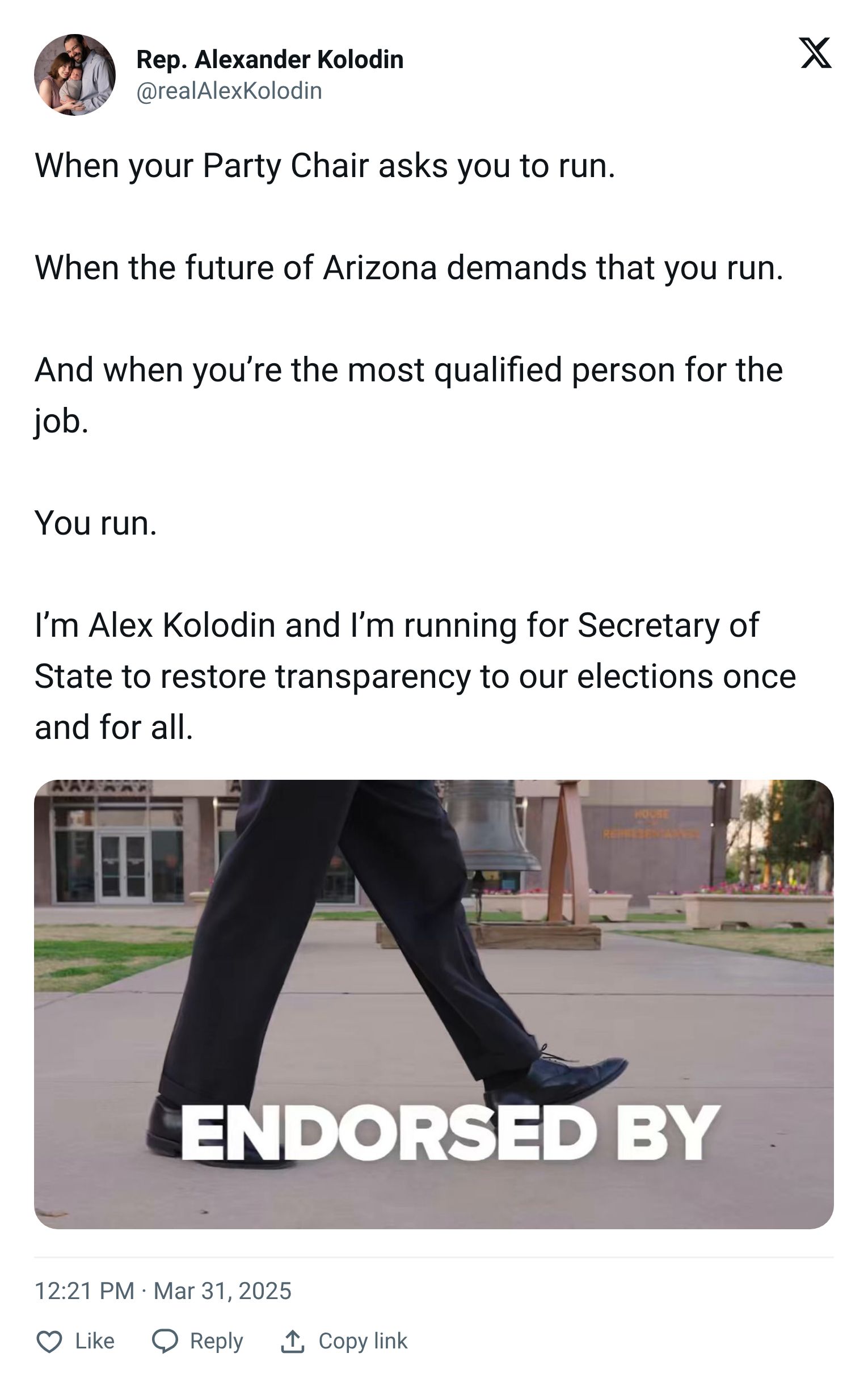
This year, the Yee and Kolodin campaigns paid Forged $243,000 and $90,000, respectively.
Yee lost to Democrat Teresa Leyba Ruiz, and Kolodin was defeated in a landslide by Democratic incumbent Secretary of State Adrian Fontes.
But therein lies the beauty of the consulting business: The check clears either way.
“We enjoy doing our work on behalf of right-of-center clients — we actually do some Democrat work as well, right? Some Democrat candidates and and uh, you know, causes as well,” Hoffman told us. “But uh, we enjoy doing ad agency work. We’re very good at it. And, uh, so, yeah.”
He demurred when asked which Democratic candidates or causes those were. If they do exist, none of them are in Arizona’s campaign finance database.
Generally speaking, he didn’t want to talk about the details of his businesses.
“My company is not a public figure, okay?” Hoffman said, not specifying which one of his many companies he was talking about. “I’m not gonna get into my company other than to say we have clients all over the country.”
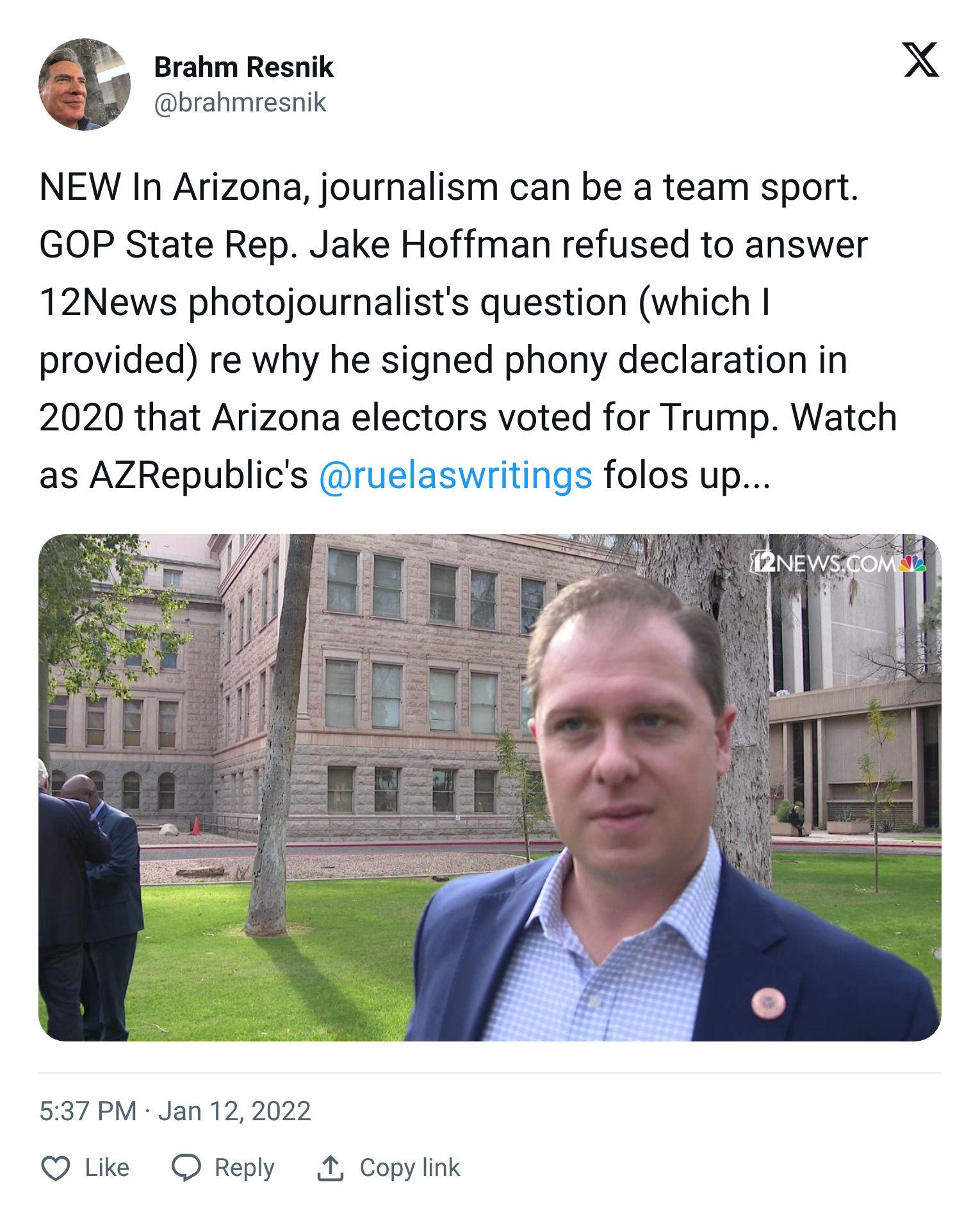
That’s an accurate statement — Hoffman’s been spreading business far from Phoenix. Not bad for a one-time fake elector.
Records in New Hampshire, compiled and organized by VoteLog, show that Hoffman’s company was paid about $220,000 for work all the way across the continent to support Republican U.S. Senate candidate John Sununu, who also lost.
And again, the entity making those payments as an independent expenditure was Turning Point.
It’s actually Hoffman’s business in other parts of the country that’s fueling speculation that he’s planning to leave Arizona soon.
After ABC15 reporter Garrett Archer noted that Hoffman’s Queen Creek house was listed for sale, rumors began circulating — on Twitter and at the Capitol — that Hoffman’s departure was imminent.
“I heard he had a lot of clients in Florida and he might be moving,” one GOP senator told us.
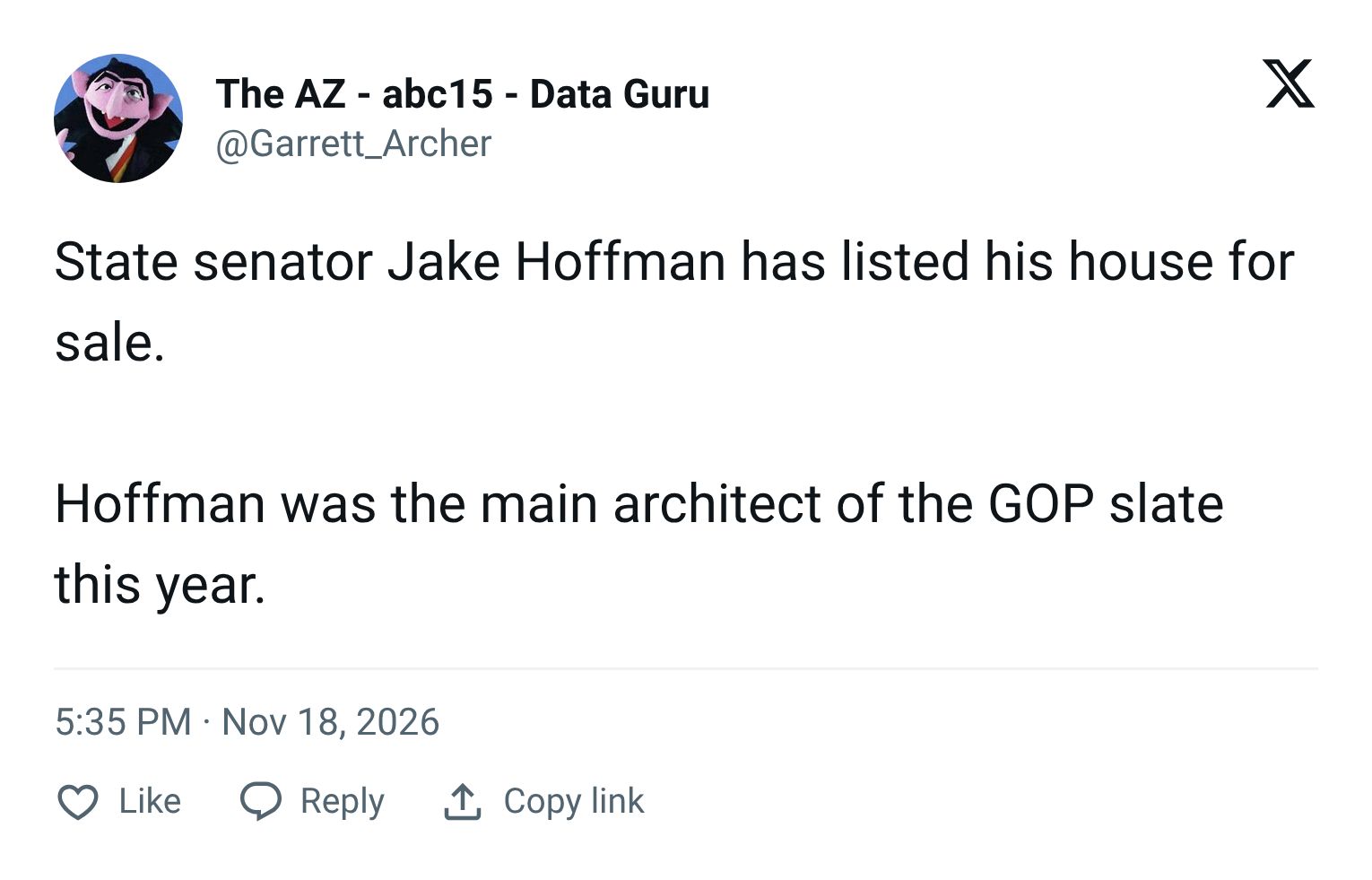
It seemed plausible enough — though far from verified.
Hoffman wouldn’t tell us whether or not he plans to decamp.
But the house, which Hoffman listed himself (since he’s also a real estate agent) — and which boasts of a “custom walk-in vault in the executive office (that) delivers secure, high-end protection for firearms and valuables rarely found in today’s market,” per the Zillow listing — has been on the market since October 17, well before the election.
He’s asking for $3.2 million after buying it for $1.1 million in 2020.
Further fueling the fires of speculation is the reality that Hoffman and his nine fellow GOP senators will face: life in the superminority.
Republicans (particularly in the Senate) will have effectively no leverage to influence policy decisions — and majority power is going to be a very hard drug for those senators to go cold turkey on.
Hoffman, who in the past few sessions swung his weight around as the chair of the Director Nominations Committee by shooting down a number of Hobbs’ nominations for key government roles, seems likely to be chief among the power junkies going through withdrawals.
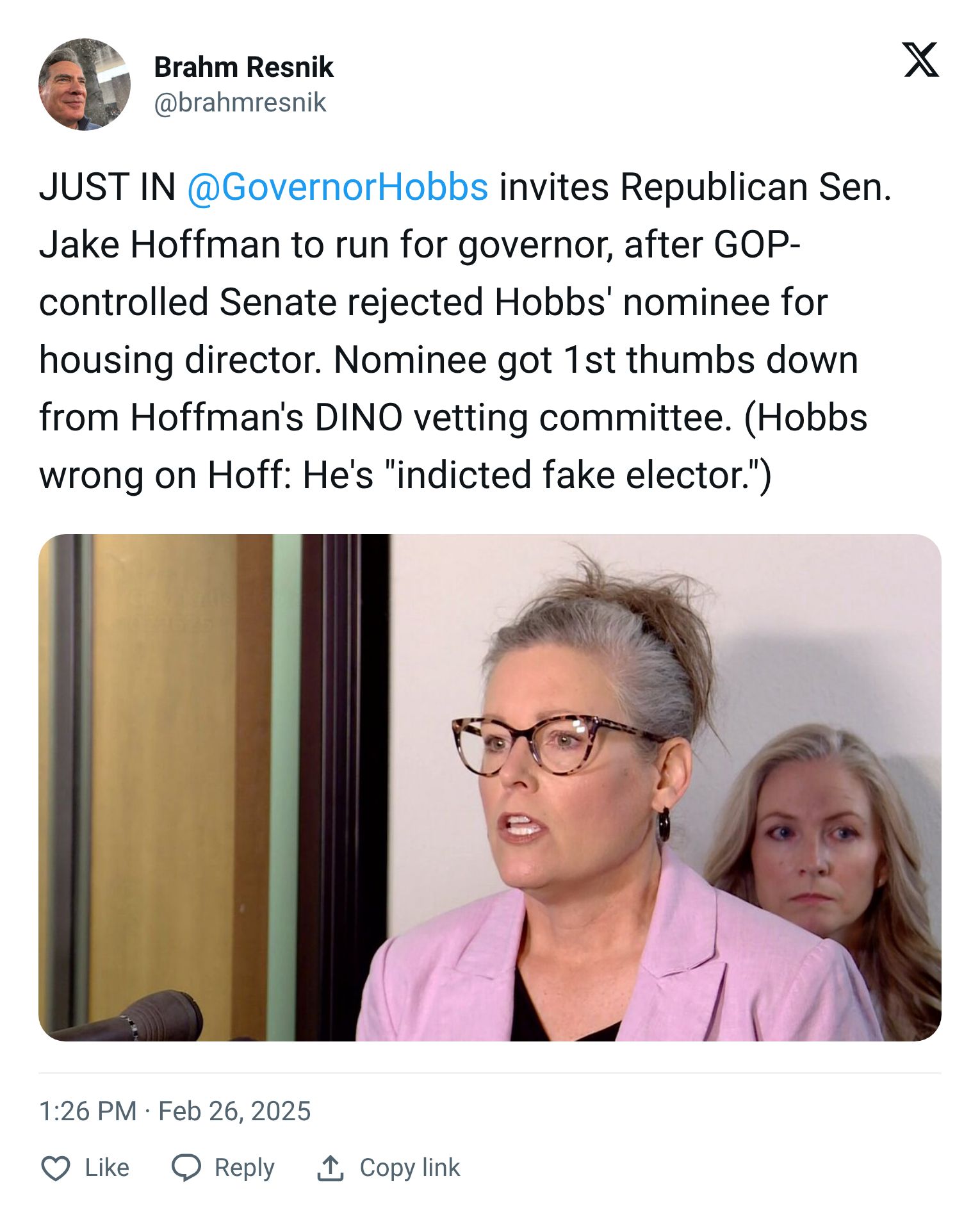
That same GOP senator who spoke to us on the condition of anonymity told us that Hoffman explicitly said that, if he’s placed on any committees, he won’t even attend the hearings.
Hoffman didn’t deny it.
“The reality is I have not requested any committees because I believe that the committees are gonna be so stacked in Dems’ favor that the floor is where the most valuable work on behalf of my constituents will be done,” he said.
He’s also betting that Democrats will overplay their hand in the next two years and give Republicans another shot. And based on our conversation about policy issues that he thinks his party needs to focus on, it doesn’t seem like he’s got his bags packed.
We asked Hoffman what he thinks of the future of the Republican Party after President Donald Trump leaves office.
While he declined to blame Trump for anything like high gas prices or an unpopular war (as Kolodin did on Twitter), Hoffman pinned the historic shellacking on national Republicans.
Everyday people, he said, don’t take kindly to “feckless talking heads” like Republican U.S. Sen. John Thune, the current GOP leader in the Senate, whom Hoffman called a “total loser.”
The Queen Creek senator and serial entrepreneur mentioned grocery prices, utility rates, data centers (which “should be positively impacting the wallets of the people who are, you know, directly affected by their placement”), and Flock cameras and other automated license plate readers as top issues his party must address.
“Republicans are the party of the working man, right? Working men and women of America. And we need to continue to focus on policies that positively impact their lives,” he said. “Certainly Democrats won’t let most of those see the light of day. However, that doesn’t abdicate our duty for, you know, continuing to champion them.”
Considering his reluctance to abdicate that responsibility, we’d expect to see Hoffman on the Senate floor (and not in committee hearings) next year.
But perhaps whether or not Hoffman is sticking around the desert isn’t the most pertinent question.
What we’re wondering, and what remains to be seen, is whether Hoffman will still be able to perpetuate a lucrative political consulting operation while redolent with the stench of his clients’ defeat.
Something tells us he’ll find a way to bottle and sell it as eau de parfum.
1 We also noticed that, just above payments to 1Ten on a campaign finance record, another company that was paid out by Turning Point shares a Queen Creek office address with 1Ten. It’s called Engaged America, and it was paid more than $415,000 by Turning Point this year for “social media.” It’s registered in Delaware, so official ownership information is unavailable — but Hoffman lists himself as its CEO on his Linkedin profile.