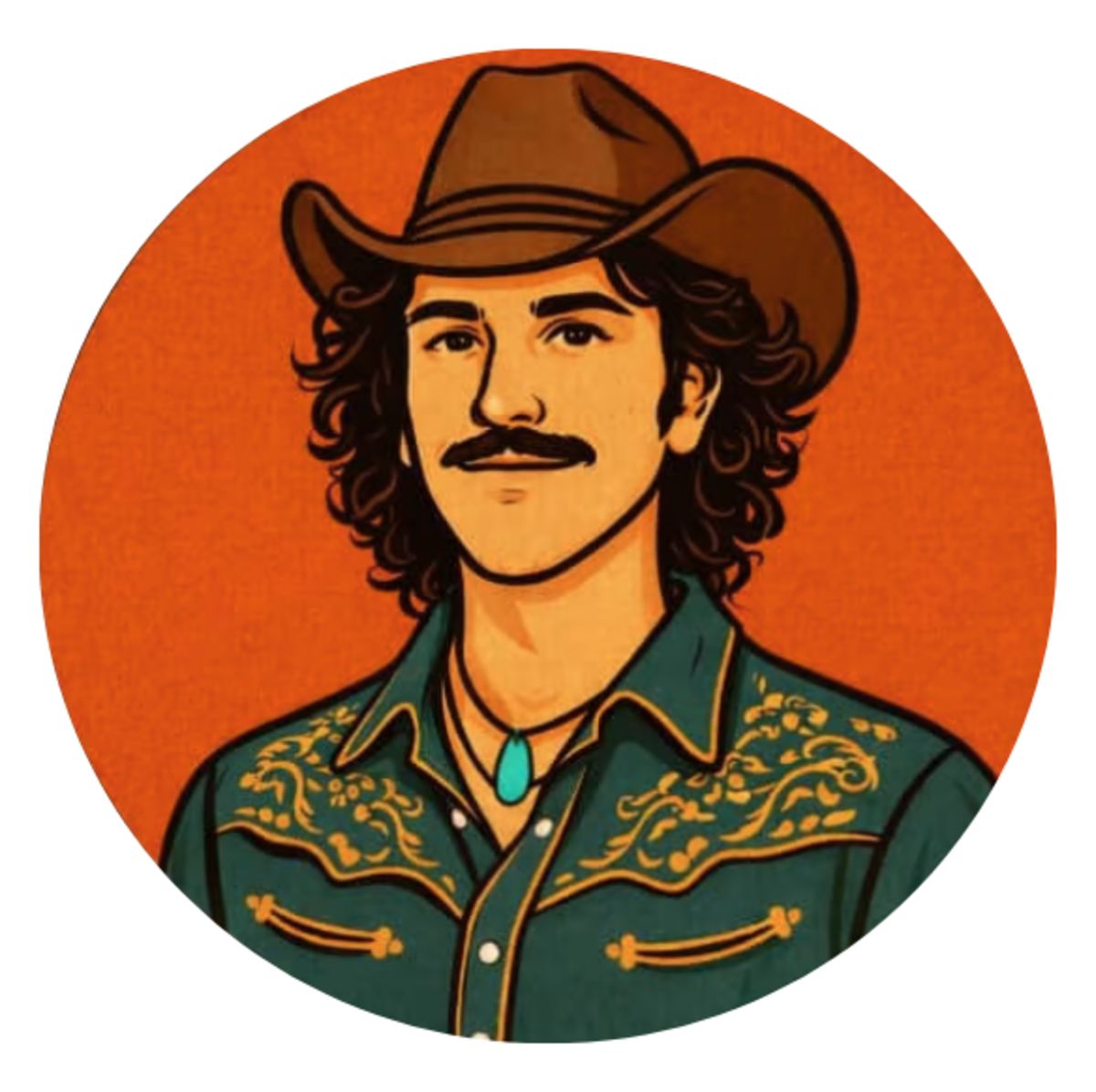
The Arizona Legislature has its fair share of characters — and one who has haunted its halls for decades yet often slips under the radar is GOP Sen. J.D. Mesnard.
But make no mistake: Mesnard, who represents Chandler, has long been and still is at the center of Capitol politics. He has a reputation as a process guru and policy nerd (especially concerning taxes) whose deep knowledge of the Legislature has given him major credibility among lawmakers in both parties. That’s due in large part to working as a staffer for eight years before he was ever elected.
That experience came with advantages. Mesnard was named chairman of the House Finance Committee in 2011 as a freshman — a prestigious appointment for a newbie. He became speaker of the House in 2017 before joining the Senate two years later, where he ran for Senate President during the transition but lost.
But next term, the Senate will lose Mesnard’s consistent presence. After serving eight consecutive years in the House and another eight in the Senate, Mesnard isn’t running for reelection.
Now, he’s looking back on a quarter-century spent at the Capitol, where he started as an intern while studying music composition at Arizona State University. As he tells it, his long Capitol career happened by strange chance.
“Even the internship itself I heard about in the first place from a music friend, one of my colleagues in music school,” he told us. “So arguably, had I not gone to music school at ASU, maybe I wouldn’t have ended up in politics. I don’t know.”
He’s been the driving force behind a number of major changes to Arizona government, like the newly created lieutenant govern position — which was approved in a 2024 referendum.
But Mesnard had been working to get that one done for quite some time.
He also tried to push a few changes that didn’t stick.
But Mesnard isn’t trying to quit government: He’s running for Justice of the Peace in the San Marcos precinct in Chandler.
We spoke with Mesnard about his long tenure at the Legislature, some of his wonky reform ideas and his musical taste.
Here’s the interview, edited lightly for clarity and concision:
Since you’re not running for reelection, what do you feel is your greatest accomplishment in your many years at the Legislature?
Boy, that is tough. It’s like, which of my kids is my favorite?
I would say — in the grand scheme of things — the flat tax was my proudest accomplishment. It’s something that I had set out to try to achieve when I first ran for office, and I began laying the foundation for it in my early years in office, not knowing when the day might present itself when we could move to a single rate tax structure.
That’s my biggest achievement among several biggish items — the 20% teacher pay raise (in 2018), creating a law against revenge porn when it was first becoming a concept, conceiving of the office of lieutenant governor that went to the voters and was approved.
I’ll tell you my greatest gift to the Capitol: the creation of the bill voting timer, which I introduced when I became speaker.
I was up there in the speaker’s chair and my phone was blowing up with lobbyists and people saying, “this is the greatest addition to the process in 50 years.” The House was notoriously slow.
On the flat tax — based on the data you’re seeing, is it fair to say that’s eating into state tax revenues? And if so, is that worth it?
Anytime you do that, people are gonna say in a static analysis that you’ve lost revenue — that we could have done all these great things with this revenue. And I get it.
The flip side is it’s not static — it’s a dynamic environment. And what’s been interesting to me is that we have cut not only income taxes but corporate income taxes. I remember when we cut that, people were apoplectic that, “Oh my gosh, the big corporations” and all this stuff.
You can lose revenue on one side of the equation, but the other side of the equation is creating an environment that’s conducive to growth and other things that also bring in revenue.
I am a long game guy. It adds up over time if you keep your eye on the long game.
How did you get into conservatism? Do you have any key political heroes?
I was raised in a household that was fairly conservative — not very political but, you know, we voted.
I think Jon Kyl was a really good member of Congress, and I appreciated his temperament. He was a leader, but he was a little low key. I remember when he first announced his retirement from the Senate, there was this large number of senators that signed a letter pleading with him not to retire. I mean, I’d never seen anything like that before.
I don’t know him super well, but I did have some interaction with him over the years and he was always really into the policy. He was always kind of a gentleman’s gentleman — a statesman, if you will.
I never set out to pursue this political scene. I stumbled into it when I was in college through an internship at the Legislature in my senior year. During that semester/session, I fell in love with the policymaking process. And that’s what ultimately led to a path I had never anticipated.
You got your bachelors in music composition. Can you explain what role music plays in your life — and what kind of compositions did you make?
Well, my original hope in life and interest was in writing music for film and television.
Honestly, I would have had to, like, move out to California and make it in the movie world or television. It’s pretty hard.
I do like to write music that’s kind of that epic orchestral music, although I haven’t done it in a very long time.
Like, Hans Zimmer type of stuff?
Love Hans Zimmer, yeah. John Williams, James Horner — who passed away. When I listen to music on film, I can often tell Zimmer’s style, either in his own work or in that of his students.
While you were studying music in college, did you have any favorite bands?
That was never the type of music I was into. I listened to oldies, I guess. The music I listen to is like, you know, Beethoven, Mozart. It’s like classical orchestral pieces, and/or film music. I didn’t really listen to bands, even to this day. I’m not really plugged into the bands so much as kind of the more classical music school.
Can I ask, did you have friends in college?
(Laughing) Despite being a nerd, I did.
I went to high school here and a number of my friends went to college at ASU. I didn’t really pick up many friends from music school. So most of my friends are from pre-college that I’ve just kept in touch with, even though they pursue very different things.
I lived at home through college, so I didn’t do any of that fraternity, dorm stuff. I missed that whole scene, thankfully — saved my money.
Favorite film score?
When I was asked that question in my intern interview my answer was “Last of the Mohicans.” I was obsessed with that one for a while, but not any more. It’s probably something more traditional like John Williams’ “Superman.”
What instruments do you play?
Piano. I never had a keyboard growing up, just had the regular piano — which is actually in my office at the Capitol. That’s the piano I grew up learning on.

It only took some mild internet research to find this adorable gem.
When did you know you were going to be that guy — the policy nerd. Did you do Model UN? Debate team?
No, I never did any of that kind of stuff. My friends and I would debate issues among ourselves. We would get into these intellectual debates and argue with each other, and I kind of enjoyed the discussion.
What kind of lawmaker does it make you when you have experience being a staffer at the Legislature?
The practical side is I started in the Legislature as a freshman (lawmaker) with the same kind of experience and maybe more in some ways than people who end their tenure in the House. I was starting with eight years.
Now, I didn’t know much about campaigning. I heard stories from legislators and I tried to adapt what I felt were the most useful tools. Like I would knock on doors, I would write notes and leave them if people weren’t there.
But as a policy advisor, you definitely get into the policy weeds. I wrote — helped write — bills, amendments. So even to this day, I’ll write my own language on stuff because it’s just faster for me to do that than to tell someone else what I want to do.
I’d had the benefit of almost growing up, if you will, in this world. I was in my early twenties.
When I ran for speaker and became speaker, one of the things I did is I put out a little manifesto of sorts where I said what I was gonna do, things I wanted to change in the process. I created some new rules that the House adopted and now the Senate has adopted. For instance, and it’s become popular, is what’s called the AD COW, which stands for additional committee of the whole.
What was the hardest part about being speaker?
Presiding over two historic challenges that I had to deal with in pretty close proximity was definitely unique.
One was the expulsion of a member of the House (Don Shooter) — and it had been 70 years since the House had expelled a member. And the teacher strike and the Red for Ed movement. We had tens of thousands of people marching on the Capitol.
Being the speaker after David Gowan, you hid a plaque that Gowan had put up. Did you ever return that — or what happened to it?
I’m not saying I know what you’re talking about, but somewhere in the House there might be a plaque that was made, um, that never got mounted, and I’m not sure where it is actually at this point.
What’s one reform you didn’t get done that you wish you did?
I still don’t like strike-everything amendments. When I was speaker, I did ban them unless they were about the same subject — sometimes it’s just easier to rewrite a whole bill. That’s totally legit to me, but what I don’t like is when you use a strike-everything amendment to go around the bulk of the process.
I do think that the process really has a refining impact that’s important. The process isn’t supposed to be like pulling a fast one — it’s supposed to really be thoughtful and methodical and open and transparent. Strikers are none of those things.
Who do you think is positioned and capable enough of taking over for you as Senate tax overlord? What advice would you give them?
I don’t know. Tax and finance are one of those things where you love it or hate it, and far more people hate it. Sen. Vince Leach would be a natural, but he’s leaving, too. I don’t know if Sen. (Shawnna) Bolick is interested. On the House side, Mr. (Rep. Justin) Olson, my current counterpart and chair of the Ways of Means Committee, is the obvious choice.
I’m an incrementalist by nature. I think a lot of people get into office and get frustrated that they can’t just snap their fingers and make massive things happen. I knew that that wasn’t the case because I’d served on staff. My advice is, it’s okay to think big — but pursue little achievements. Then when that big moment arrives when you can make a big leap forward, you’re prepared.
Thinking back since you started as an intern, what has changed and what hasn’t?
It does feel like we’re more polarized as a body than we used to be. There used to be a lot more crossover from both sides, I suppose. And I didn’t always agree with it but I just thought that there seemed to be more willingness to work with each other and not demonize the other side.
I do think that we are — and I’ll nerd out for a second here — clearly in the midst of what is gonna be viewed as a political era of change. When Donald Trump became president, it was a fundamental change for the Republicans and by extension the Democrats and society as a whole. I think people today throw a lot more bombs than they used to — and to some degree, there’s a number of people on both sides of the aisle who enjoy that.
The state is different, too.
What hasn’t changed is there’s always been tension between the Legislature and the executive branch, and between the House and Senate.
What needs to change but never will?
I have gotten annoyed — maybe borderline irritated — at how often people assume that when they’ve taken offense it’s because somebody has wronged them or broken a rule. Most of the time, you just have hurt feelings.
Have you ever smoked weed?
No.
What would it take for you to smoke weed with us and listen to Hans Zimmer?
Hahahahahahahaha — I’d have to think about that.
Despite my bill, which I’ve become known for this session more than any other bill I’ve ever run, I don’t really care if people do it on their properties. I just want people to be good neighbors. As a dad, I am, yes, being a little overprotective of what they’re doing and how it’s affecting my kids.
Would I consider it? I don’t know. It’s not at the top of my list of things to do. There’s a little old-fashioned thinking wrapped in my brain, as far as me (using it) personally that I’d have to get around.
Well, the offer stands.
I will keep that in mind.