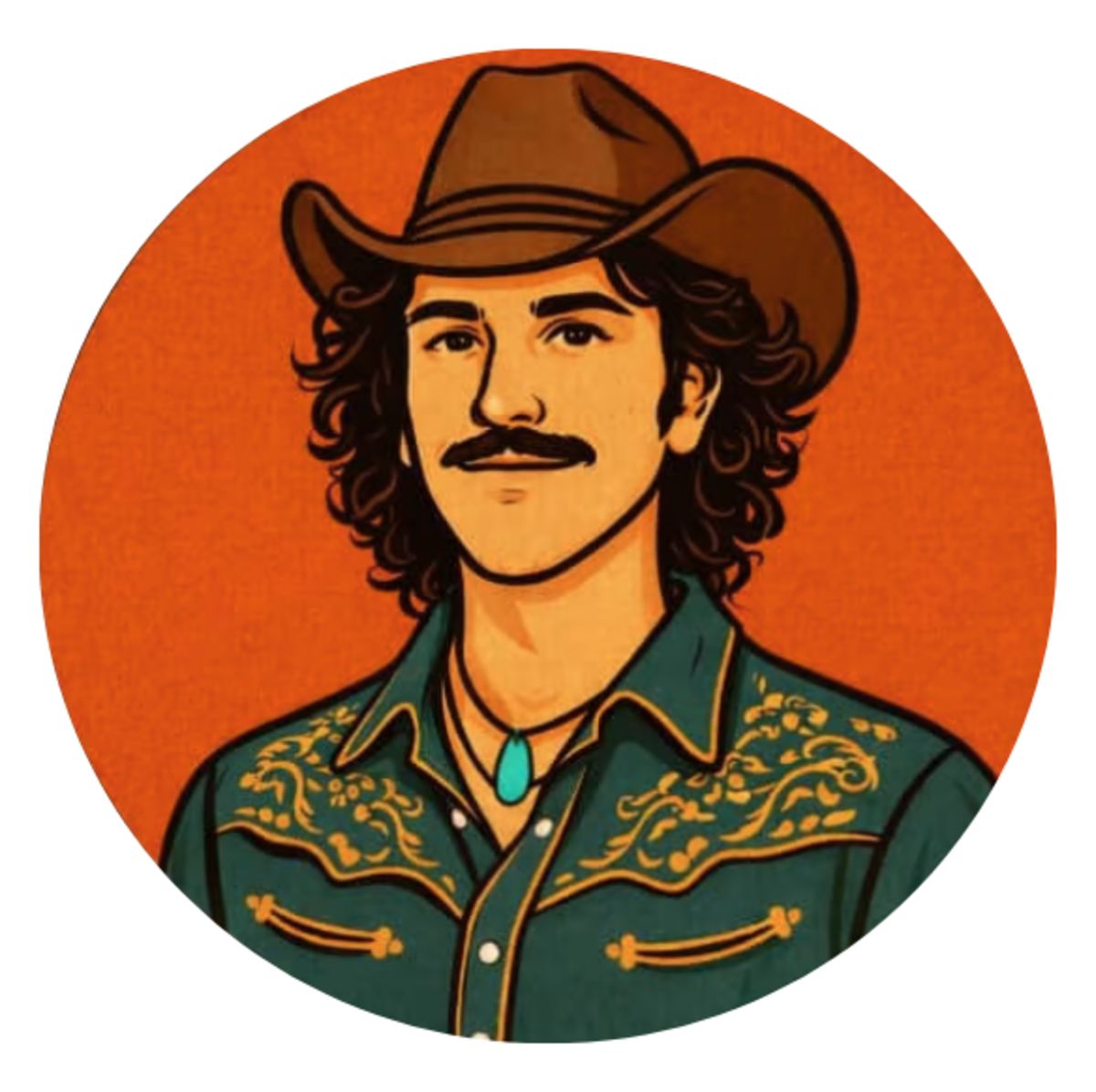
If politics is a dance — and the Arizona Legislature a formal and sometimes stuffy western ball — Democratic Sen. Analise Ortiz is the attendee bringing the freshest and most indecorous moves to the floor.
And the lady hath no fear of making a scene.
All the men in their suits and ties can do is shake their heads and mumble such-and-such about the rules.
But that defiant flair is carefully calculated. Breaking up the monotony of conventional politics is central to Ortiz’s mission of bringing government closer to the people.
The 33-year-old is the Senate’s rare fledgling standout — she’s already made a name as a young gun with a fiery tongue and an unmistakably raw, swaggering style. Thanks to her uncompromising and direct oratory talents, she’s established herself as a vox populi among the progressive voters, organizers and activists who are otherwise uninspired by Democrats’ establishment niceties.
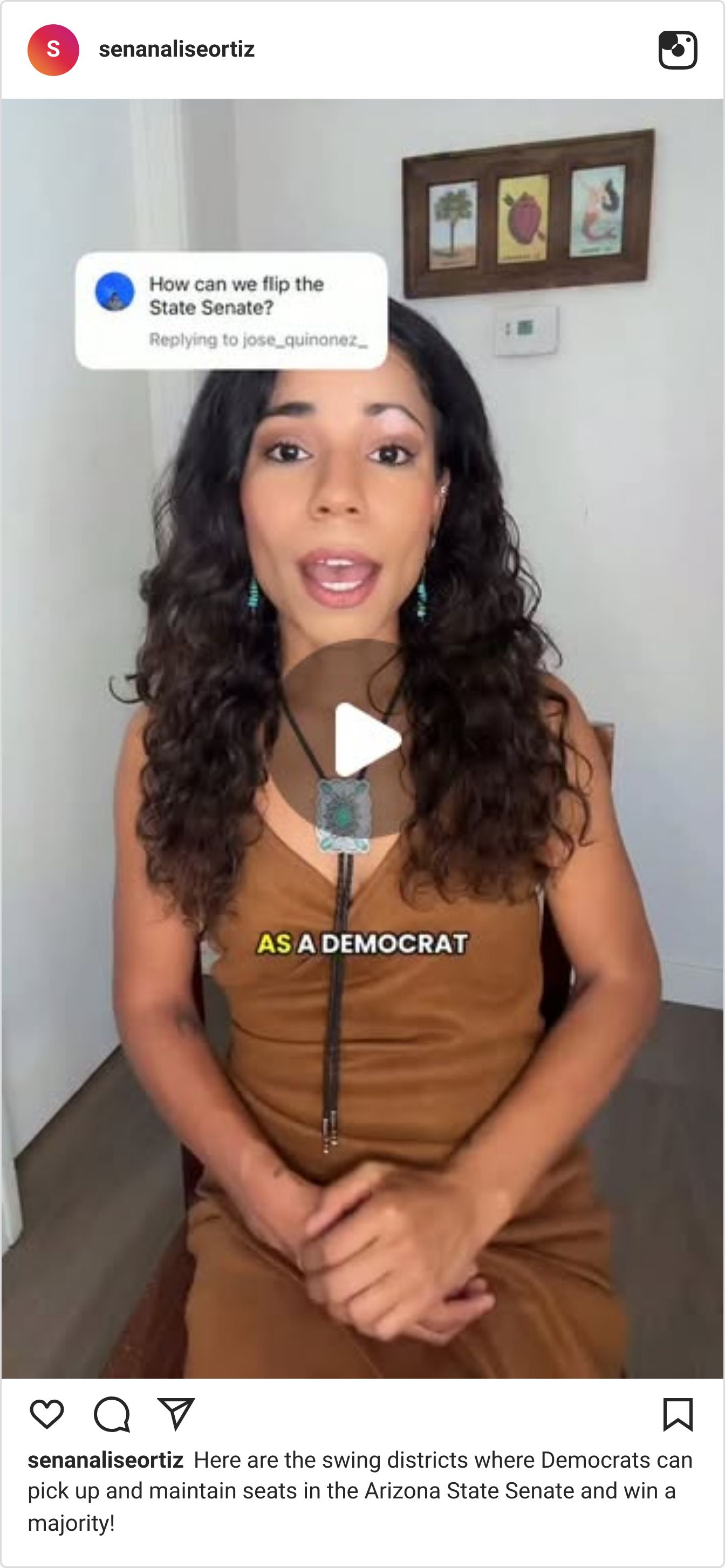
What really sets Ortiz apart from her colleagues, though, is her operational prowess on social media, where she makes direct-to-camera videos on TikTok or Instagram breaking down the latest developments at the Capitol in a language stripped of legalese hurdles. She translates for the streets.
And she’s getting noticed in leftist circles nationally, too.
But in a political environment where the top dogs are all toasting themselves as the purest, greatest fighters for their side, Ortiz isn’t trying to climb the party ladder.
She’s trying to knock it down from the base.
With only a few weeks to go before the July primaries, Ortiz launched her first electoral project aimed beyond her own career. She assembled a coalition of progressives trying to take down establishment Democrats under the banner of “No Safe Seats.”
“I knew and believed in every single person that was running to challenge these three incumbents who have made very harmful choices that have hurt people,” Ortiz said. “And I figured, you know, I have name ID, I have a donor base, I have people who know and trust me. It’s important to uplift these first-time candidates because we can go far alone, but we can go so much further when we’re together.”
For a first venture, it was fairly successful.
The coterie raised about $10,000 to split among the five of them. The two House candidates in Ortiz’s district — Alberto Flores and Lisbeth Arescurenaga — walloped incumbent Rep. Lydia Hernandez and her ally. And in Tucson, Miranda Lopez eked out a second-place finish but couldn’t top Ortiz’s target, Rep. Consuelo Hernandez. Consuelo’s sister, Alma Hernandez, also beat No Safe Seats candidate Rocque Perez by about 600 votes.
But in her battle against the centrists, as paradoxical as it may seem, Ortiz sees beyond the traditional partisan divides that tend to suck up the most air in political discourse. For her, like plenty of other young Democrats across the country, it’s not about left versus right — it’s about the American people versus the American elites.
“There are people in small-town, rural middle America who voted for Trump who are just as opposed to these data centers as far-left socialists,” Ortiz said. “And so, there is an opportunity to build bridges and to create a movement that is truly about and for the working class, against the elites who are sucking our planet for everything it’s worth, who are not caring that people’s bodies are crumbling beneath them in these jobs that are killing us. Like, this is real.”
We linked up with Ortiz on a sweltering afternoon earlier this month at Tropic Thunder — a recently opened “cheeky tiki” bar on Roosevelt Row in Phoenix — to discuss her latest undertaking, what moves her and her Valley upbringing over tropical drinks with names like “zombie” and “painkiller.”
Here’s the interview, edited lightly for clarity and brevity (though we had to keep most of her uses of “like,” for flavor):
Let’s talk about No Safe Seats. When did you decide that you were going to make an effort to influence the primaries? What was the genesis of that?
I had been in communication with all of the candidates that were part of the No Safe Seats effort about how their campaigns were going — and I remember how hard it was to be a first-time candidate, especially when it comes to raising money.
We paired it with this social media series of videos and talked to different people who were willing to share our content to really try and get the message out there that there was a movement in Arizona to challenge the status quo — and that the fire that has caught on with (New York City Mayor) Zohran Mamdani and the Democratic Socialists of America across the country is alive and well here. And we know that because we have been talking every day to those voters who are so hungry for something different.
We were up against very serious money, especially in the case of someone like Rocque Perez, who came only 600 votes away from taking out a longtime lawmaker in a Senate race. And we saw how much money was invested into Alma (Hernandez’s) campaign from corporate interests and other interests that are not aligned with what the people want. I think paying attention to campaign finance reports is something more voters should be doing.
I’m glad you mentioned Mamdani. How much of this was noticing that and thinking, “Hey, there’s a blueprint for winning as a leftist,” and bringing that platform to localities in Arizona?
That was a part of it. I think we’re seeing the way that the Democratic establishment has failed — and I think some people would argue that they are the reason we have Trump 2.0. I cannot tell you how many Muslim voters I met in 2024 who told me they were not going to vote for Harris because of the genocide in Gaza. The Democratic establishment was not listening, and we saw what ended up happening. That wasn’t the only issue, but it was a factor.
And you don’t think they learned from it?
They still have not learned from it. And I’m still having those conversations to this day. I think the anger and the frustration is so palpable when you’re out there knocking doors every single day the way I am and the way my colleagues that are part of No Safe Seats have been.
Early on, when I was getting signatures back in January, I knocked on the door of an older Latino voter. And he was just looking at me as I was giving my pitch, and I could tell he was skeptical. And then he just stopped me and he goes, “What do you think about Chuck Schumer?” And I said, “I think Chuck Schumer is not doing enough to meet this moment.” And he looks me dead in the eyes and goes, “Yeah, fuck Chuck Schumer.” And he takes the petition out of my hand and signs my nomination petition. This was a Democrat who voted in three out of the last three elections. This is the sentiment of the party. They want people who are going to fight, and they’re tired of the status quo.
It’s rare for someone not in party leadership to spearhead an effort to get others elected. What drove you to undertake the No Safe Seats mission?
This endeavor that I embarked on (when first running for office) in 2022 was never, ever about me. It was about finding a way to pave a pathway forward for progressives. And in that journey, I have faced huge challenges from within the Democratic Party — I have faced the gatekeeping, I have faced the racism, I have faced the misogyny from within the party itself.
And so, if I can do my part to push back on that by uplifting other candidates and showing what it looks like to be a role model for first-time candidates — and a mentor to them, as opposed to a gatekeeper — that’s what I want to do.

You have a willingness to speak up in the Senate in an intensely passionate, direct way. How did that penchant develop?
I think one of the biggest things is that, prior to running for office, I worked at the ACLU of Arizona on criminal justice reform. There were so many times I was watching committee hearings or watching floor speeches and just thinking to myself, like, “Why the hell are the Democrats not doing more? Why are they not fighting harder? Why are they not calling this what it is? Why are they letting the Republicans control the narrative?”
So I think that when I got elected, there was definitely a sense of speaking out of necessity. If I don’t say this, it’s not going to be reported on in the Arizona Republic the next day. If I don’t say this, the trans kid sitting at home watching this is going to think not a single lawmaker in there cares about their life.
Like, those are the types of things that kind of run through my mind when I think: Should I push that request to speak button or not?
Of course I think about it. I’m strategic about it. There are moments when I do really want to fight back at (Sens.) Mark Finchem or Wendy Rogers. But I’m like, is it worth it? Is it going to achieve the intended goal? So, I do weigh those things in my mind, but more often than not, it’s a matter of necessity and survival — which so many people of color have to weigh in our everyday experience.
Tell me about your relationship with Phoenix Councilwoman Anna Hernandez. I know they call you two “thunder and lightning.” Do you miss her at the Capitol?
I miss the thunder to my lightning at the Legislature, absolutely. But she’s doing such amazing things on the city council and I’m so glad. I think our relationship of working together, governing together, and seeing ourselves as mutually beneficial to lifting up our community hasn’t changed at all. And so we’ve been able to continue to work on things. Our districts do overlap. I live in her district; she is my councilwoman. So we’ve been able to work on things together.
I learned so much from her in terms of how she strategized at the Legislature, how she negotiated, how she moved from a place of authenticity. I just feel incredibly grateful to have the opportunity to now fill her shoes at being her successor (representing the district in the Senate), but also to watch her thrive on the council.

Ortiz and Hernandez in January 2024, the day they got TJ banned from the House floor — but that’s a separate story

When you were in college, you interned at the Republic. What are the takeaways from that experience that you still carry with you?
Fact-finding. The biggest Journalism 101 bit is, “if your mother says she loves you, check it out.” Right? Like, you would be appalled at how many politicians don’t think about that — and they just be retweeting shit. They just be putting out AI videos.
I was a baby reporter. You know, like, what does anybody learn during that time? I had big ambitions. I really wanted — my goal was to be an anchor at ABC15.
Where did you grow up?
The East Valley. My dad was a community college professor at Scottsdale Community College, so I grew up near there.
And what did he teach?
My dad retired a couple years ago. He taught public speaking and interpersonal communications for 32 years at SCC.
He’s a very smart man. We like to share books and book recommendations with one another. My entire life, my dad always pushed me to be the person I am now. Like when I would wake up and have an AIMS test — which, the real AZ OGs know what the AIMS test is.
I remember AIMS testing.
My dad would, like, wake me up singing the “Rocky” theme song, saying, “You’re gonna crush that standardized test.” He just always made me believe in myself. And also, because he was an educator, it drilled into my head that school is the most important thing.

Ortiz and her father at the Grand Canyon

Was he from Arizona originally?
No, my parents met in New Mexico. They had their first three kids there, and then my dad got the job at SCC, so they moved out here knowing nothing about Arizona. And then they had their last three kids here, which included me. I’m kid number five of six.
What was that like — growing up in a family of six kids?
It was a very hectic upbringing, very loud all the time.
My parents made do with what they had, and were living on my dad’s salary as a community college professor. My mom would cater weddings and events to make extra money. I remember her always clipping coupons, and my dad always grading papers well into the evening.
I mean, they made things work.
There’s Hank.
[Enter Hank, who dropped by Tropic Thunder to give TJ a nifty new work gadget, then hung out and chatted for 30 minutes about Gov. Katie Hobbs’ Spanish-speaking skills, Taco Bell orders and the Cartwright Elementary School District.]
Where were we? The last thing we were talking about was childhood. I wanted to ask you about your high school life.
I was a musical theater nerd. My freshman year, I was on the cheer team. I was captain of the JV cheer team. My sophomore year, my parents were like, “We can’t afford cheer team no more. It’s too expensive.” And I was devastated.
I can imagine.
And I decided to take theater as, like, an elective, and I had a teacher who changed my life — Ms. (Marilyn) Mumaw. She encouraged me to audition for the school play. I was like, “Fuck it. I can’t do cheer no more. So let me go audition for the school play.”
And it was like, oh, these are my people. I liked cheer, but, like, those were not my people.
When I met theater weirdos who love art, who are queer, who were, like, into music — I was like, “Oh, these are my people.”

Ortiz in a production of “Grease”

What was your favorite production you were in?
Well, I was in one musical, which was “Grease” — and that was my favorite production because I just absolutely love music.
What was the academic side of school like for you?
I was an honors student. I always did honors English, honors math. I didn’t have a lot of friends. Honestly, sometimes I would ditch class to just listen to music in the bathroom. I felt like school was a little too easy. So sometimes I’d be like, I know this. I’m gonna go listen to Green Day in the bathroom by myself.
Green Day?
Green Day is my ride or die.
I was told that you play guitar.
You were told… What’s your source?
I have to protect this source. How long have you played guitar?
Since I was 16. I play all kinds of stuff. I like to just mess around. I’m not good. I just play chords and sing and it’s very therapeutic for me.
I have one that I actually have turned into an art piece, and it’s in my office at the Capitol.
My favorite artist of all time, Billie Joe Armstrong from Green Day, was kind of well-known in the ‘90s for having, like, stickers on his guitar with his initials. So this guitar I got at a pulga (South Texas flea market) I put all kinds of protest stickers on. I play it every now and then when people stress me out and I need to, like, just have a moment to chill.

Our favorite stickers are “dump your conservative boyfriend” and the Indigenous guy in a “Caucasians” T-shirt mocking the NFL team formerly known as the Washington Redskins.

What led you to go into politics? What’s this all about?
We all want the same thing at the end of the day, which is to have a thriving community where people are able to go to work at one job, make enough money to come home, to provide for their family, to spend time with their children, and to choose for themselves whether to have children or not.
We want to have walkable communities where people can walk to the grocery store and know the clerk working there and have a sense of community with their neighbors. Those are the types of things that really make certain cities or communities great. But it’s sorely lacking here in the United States — primarily because of capitalism — and especially in Phoenix.
We face violence, isolation, and we need to find ways to build stronger senses of community and to allow people to thrive without having to literally kill themselves to pay their bills. That’s not asking for a lot. And it’s not radical! I’m tired of people who say it is radical, or Democrats who say, “Don’t talk about that — you sound like too much of a socialist.”
Right now, people are choosing popular ideas over political labels. It’s why you have people who have told me that they have voted for Trump and they have voted for me — I’ve had multiple voters tell me that.
It’s because they know me, they trust me, and they believe in the vision that I’m trying to build, which is for the common man to be able to have opportunity in the United States of America.